


Wheel Building for OEM Bicycle Programs
Wheel quality affects bicycle alignment, rolling performance, braking and final assembly. Tovin Bike prepares and checks bicycle wheels for mountain bikes, road bikes, electric bikes, fat tire bikes, folding bikes, city bikes and kids bikes based on the approved specification and component BOM.
Our wheel building and inspection support is intended for importers, distributors, wholesalers, retail chains and private label brands purchasing complete bicycles in bulk. The required rim, hub, spoke, tire and braking configuration is confirmed before sample development and production scheduling.
This page covers production-level wheel assembly and functional inspection. It does not imply that every rim, hub, spoke or tire is manufactured in-house.
Rim, Hub and Spoke Matching
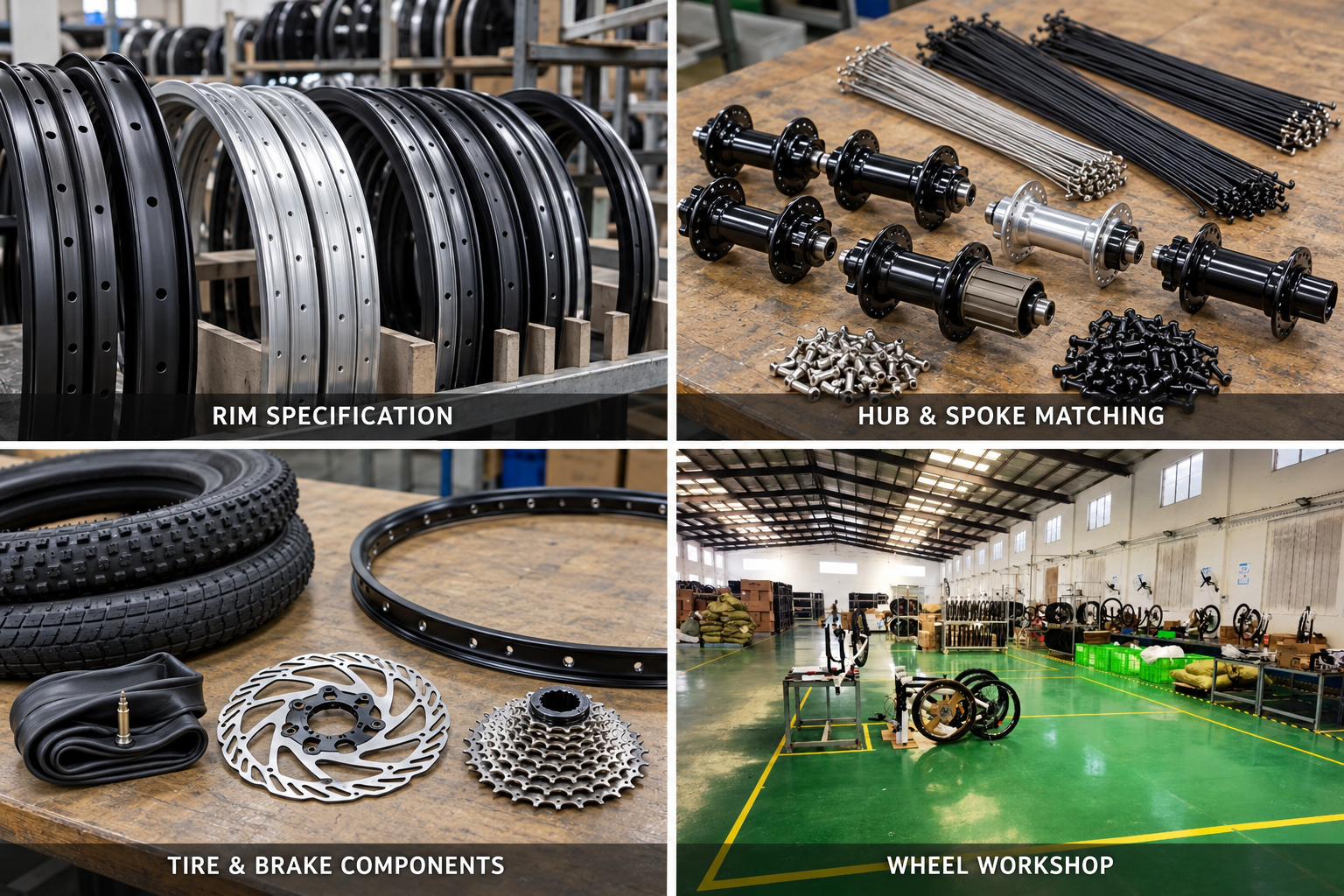
Wheel preparation starts by confirming the wheel size, rim specification, hub type, spoke requirements, tire size and brake compatibility. The selected components must also match the frame, fork, drivetrain and intended bicycle category.
Mountain and fat tire bicycles require suitable rim width, tire clearance and hub spacing. Road bikes commonly use narrower rims and tires, while folding and kids bikes require smaller wheel sizes. Electric bicycle wheels may include a front or rear hub motor and therefore require additional confirmation of axle fitment, cable position and brake compatibility.
Component availability and specification directly affect quotation, MOQ and production time. Buyers can review suitable options through Material & Component Selection before the final wheel specification is approved.
 Wheel Lacing and Spoke Tension
During wheel building, spokes connect the selected hub and rim according to the required lacing arrangement. Spokes must be fitted in the correct sequence and adjusted progressively rather than tightened unevenly.
Spoke tension affects wheel stability and alignment. Excessive or uneven tension may contribute to rim distortion, spoke loosening or inconsistent wheel performance. Production checks therefore focus on balanced tension, spoke condition and the relationship between the rim and hub.
The required process depends on the wheel structure. A standard bicycle hub, disc brake hub and electric hub motor wheel do not use identical preparation or adjustment requirements.
Wheel Alignment and Rotation Check
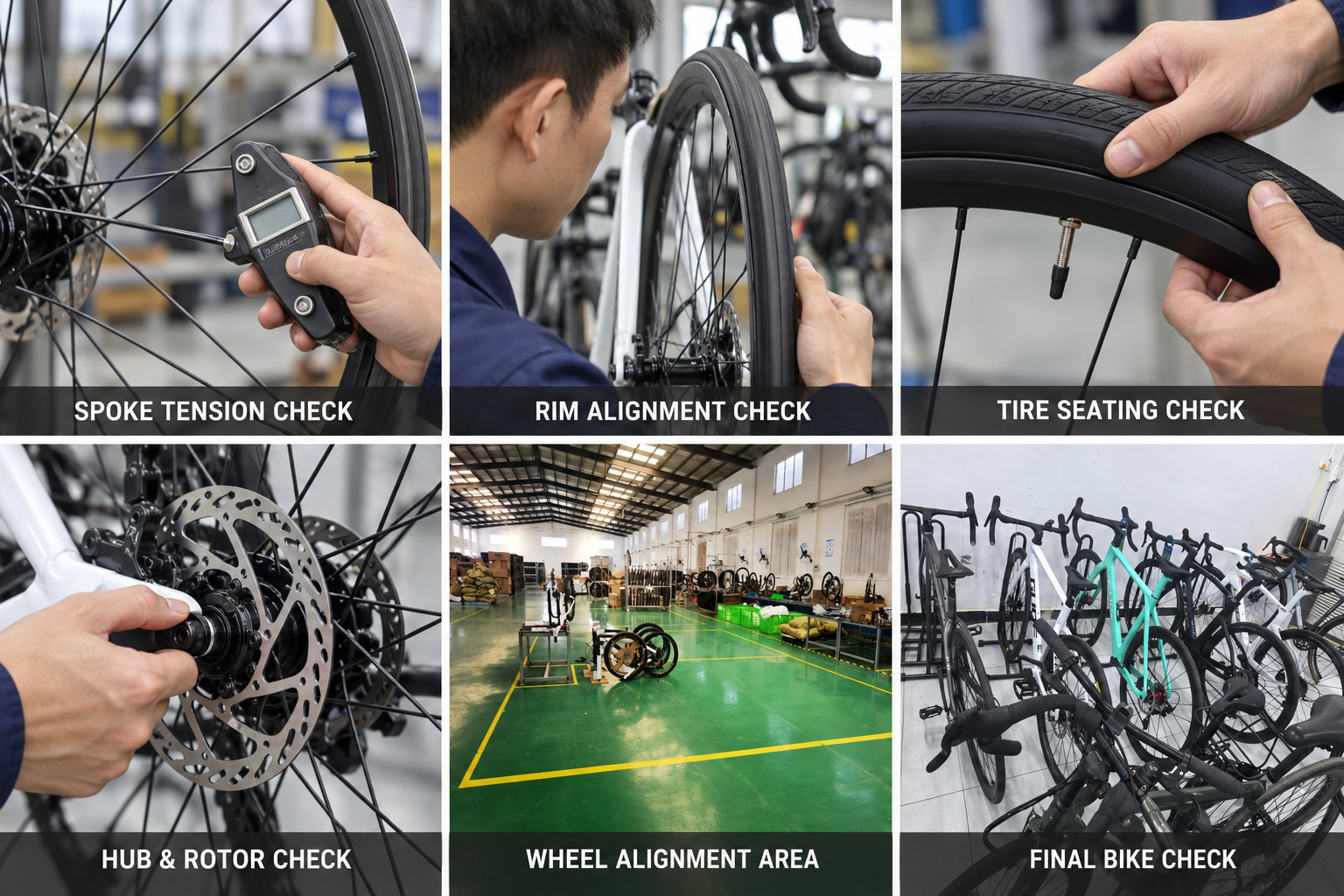
After assembly, the wheel is rotated to check lateral and radial alignment. The inspection identifies visible side-to-side movement, vertical deviation, rubbing or installation issues that could affect the finished bicycle.
Hub rotation and axle condition are also checked as applicable. The wheel must fit the approved frame or fork and maintain the required clearance for the tire, brake and drivetrain.
For disc brake configurations, the rotor position and caliper compatibility must be considered during wheel installation. For rim brake models, the braking surface and rim alignment require separate attention.
Tire, Tube and Brake Component Installation
The approved tire and inner tube are matched to the rim size and intended bicycle type. Installation checks cover tire direction where applicable, bead seating, tube position and visible damage.
Disc brake rotors, cassettes or freewheels may be fitted according to the confirmed wheel configuration. These parts must match the drivetrain, brake system and frame spacing specified in the BOM.
Wheel installation is coordinated with the broader Manufacturing process so that brakes, shifting and frame clearance can be checked on the assembled bicycle.
 Finished Wheel and Bicycle Testing
A completed wheel is checked again after installation on the bicycle. Inspection may include wheel retention, rotation, alignment, spoke condition, tire fitment, brake clearance and visible appearance.
The brake response, drivetrain operation and overall bicycle function are checked after both wheels are installed. Electric hub motor wheels also require checks of axle fitment, cable routing, connector condition and basic motor operation on the completed electric bicycle.
These are normal production checks. Laboratory impact, fatigue or market-specific compliance testing must be defined separately for the relevant model and destination.
Bulk Production and Final Inspection
The approved sample and BOM remain the reference during bulk wheel preparation. Changes to the rim, hub, spoke, tire, rotor or freewheel should be reviewed before substitution, particularly when they affect fitment, appearance or performance.
Wheel condition is verified again during Final Inspection & Packing before the bicycle is protected and packed for export.
For quotation, buyers should provide the bicycle type, wheel diameter, rim and tire size, hub type, brake system, drivetrain, order quantity and any electric hub motor requirements. Standard samples usually require approximately 7–15 days, while customized samples commonly require 15–30 days. Bulk production is generally around 25–45 days after specification and sample approval.