


Component Installation for OEM Bicycle Orders
Component installation connects the approved bicycle specification with the finished product. Tovin Bike installs frames, forks, drivetrains, brakes, wheels, cockpit parts, saddles and selected accessories for OEM and wholesale bicycle programs.
The process is suitable for importers, distributors, wholesalers, retail chains and private label brands requiring consistent specifications across samples and bulk orders. Installation requirements vary between mountain bikes, road bikes, electric bikes, fat tire bikes, folding bikes, city bikes and kids bikes.
Production follows the confirmed component BOM and approved sample. Components should not be selected or replaced only because they have a similar appearance. Model, size, fitment, function and buyer-approved requirements must be considered before installation.
Component Preparation and BOM Verification
Before assembly, components are prepared by production order and checked against the approved BOM. The review may cover frame and fork specifications, wheel size, drivetrain model, brake type, crankset, cassette or freewheel, handlebar, stem, saddle, seat post, pedals and accessories.
For electric bicycles, the preparation list may also include the motor, battery, controller, display, sensors, wiring and charger. The correct quantity and visible condition are checked before components move to the assembly station.
Buyers can confirm available frame, drivetrain, brake and accessory configurations through Material & Component Selection before sample or production approval.
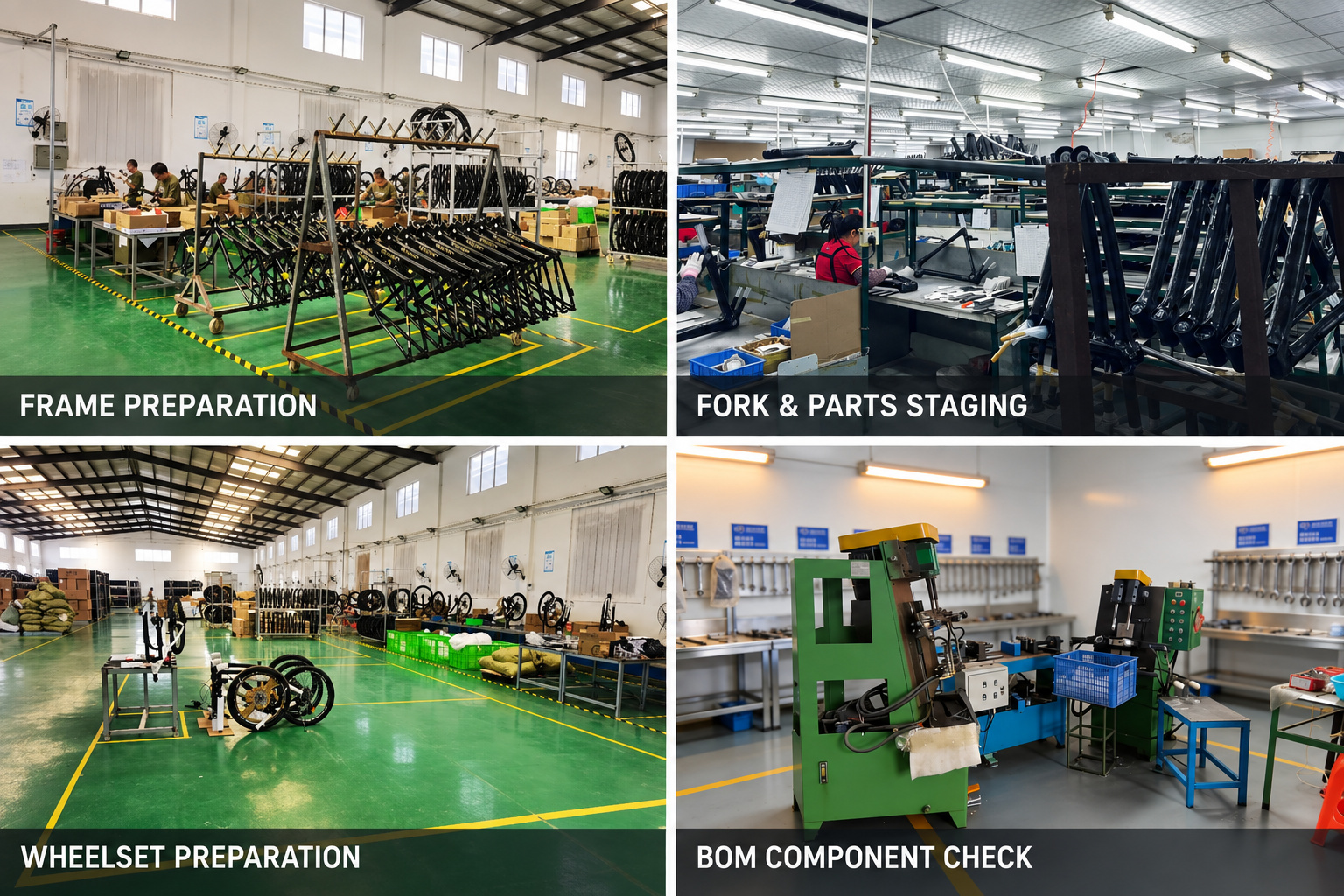 Frame, Fork and Cockpit Installation
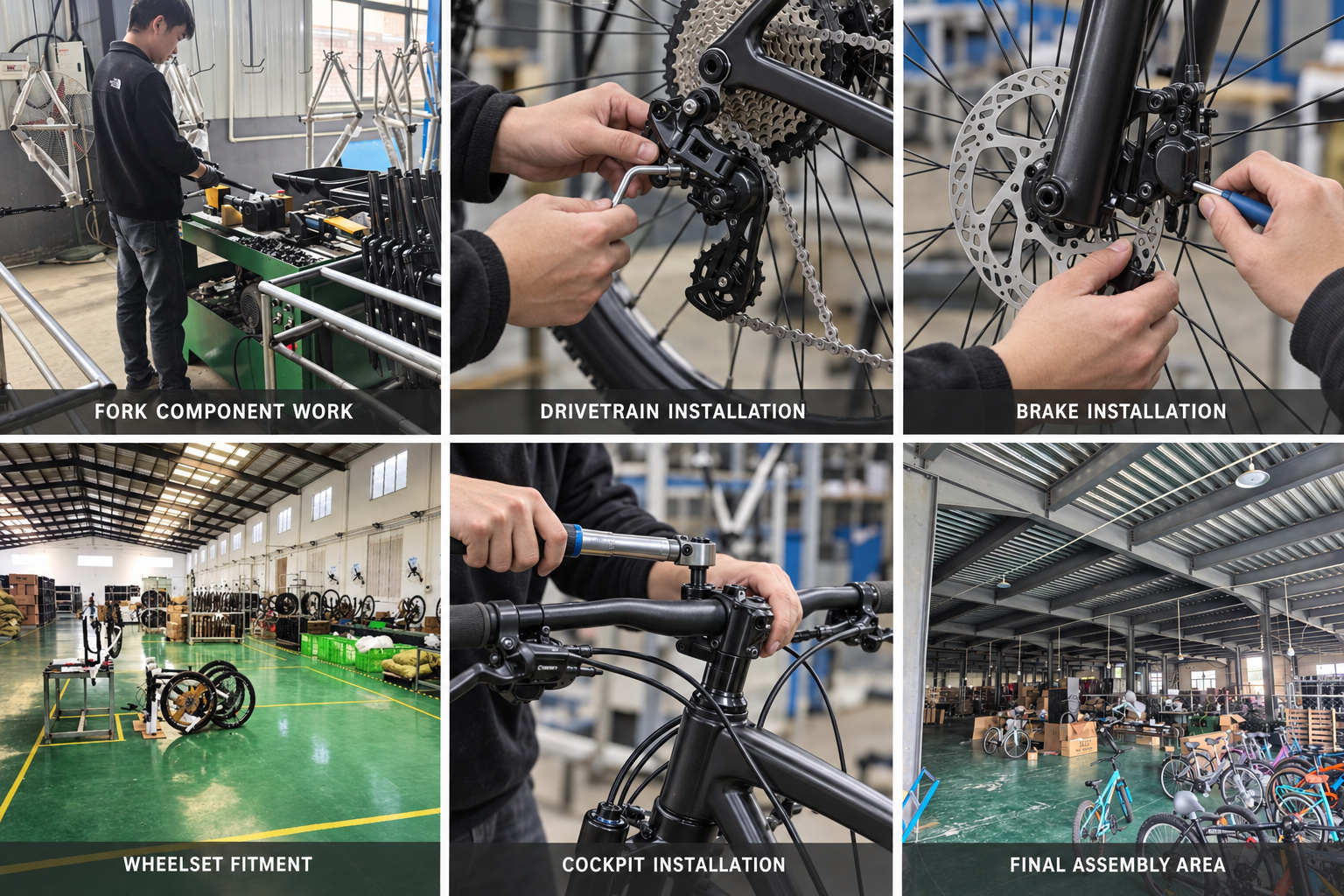
Assembly begins with the compatible frame and fork setup. The headset, fork, stem, handlebar and related cockpit components are installed according to the selected frame structure and bicycle category.
Correct fitment affects steering movement, handlebar alignment and the position of brake levers, shifters and displays. Folding bicycles also require attention to folding joints and locking parts. Mountain and full-suspension models require the correct fork or suspension fitment for the approved configuration.
Frame and fork preparation takes place before the remaining components are installed. The broader production sequence is explained on our Manufacturing page.
Drivetrain and Brake Installation
The drivetrain may include the bottom bracket, crankset, chainring, cassette or freewheel, chain, derailleurs, shifters and cables. These components must be compatible with the approved speed configuration and frame setup.
Brake installation may involve mechanical disc brakes, hydraulic disc brakes, V-brakes or another confirmed system. Calipers, rotors, levers, cables or hoses are installed before adjustment.
Installation quality directly affects shifting, accuracy, braking response, chain operation and repeatability across a bulk order. Final cable tension, derailleur position, rotor alignment and lever response are checked after the main assembly is complete.
Wheel, Saddle and Accessory Fitment
Wheels and tires are fitted according to the approved diameter, rim, hub, tire width and frame clearance. Wheel installation is followed by rotation and alignment checks. Detailed wheel preparation and verification are covered under Wheel Assembly & Testing.
The saddle, seat post, pedals, racks, fenders, baskets, chain guards, lights or other accessories are installed where specified. Kids bikes may require training wheels or protective components, while city bikes commonly include commuting accessories.
Accessories listed in the quotation but packed separately must remain identifiable during final packing.
 In-Process Adjustment and Inspection
After installation, the bicycle is checked for component consistency, steering, wheel rotation, brake response, shifting function, chain movement and key fasteners. Electrical functions are checked on applicable e-bike models after the motor, battery, controller, display and wiring are connected.
Appearance, frame color, decals and accessory fitment are also compared with the approved sample. Any installation issue should be corrected before the bicycle moves to Final Inspection & Packing.
Information Required for Production
For a component installation review, buyers should provide the bicycle type, frame and wheel size, detailed BOM, preferred component brands or models, brake and drivetrain requirements, quantity by model, accessories and electrical specifications where applicable.
Standard samples usually require approximately 7–15 days. Customized samples commonly require 15–30 days, while bulk production is generally around 25–45 days after the specification, sample and commercial terms are confirmed. Actual timing depends on component availability, order quantity and configuration complexity.