

 Develop a Bicycle Program Around Your Market
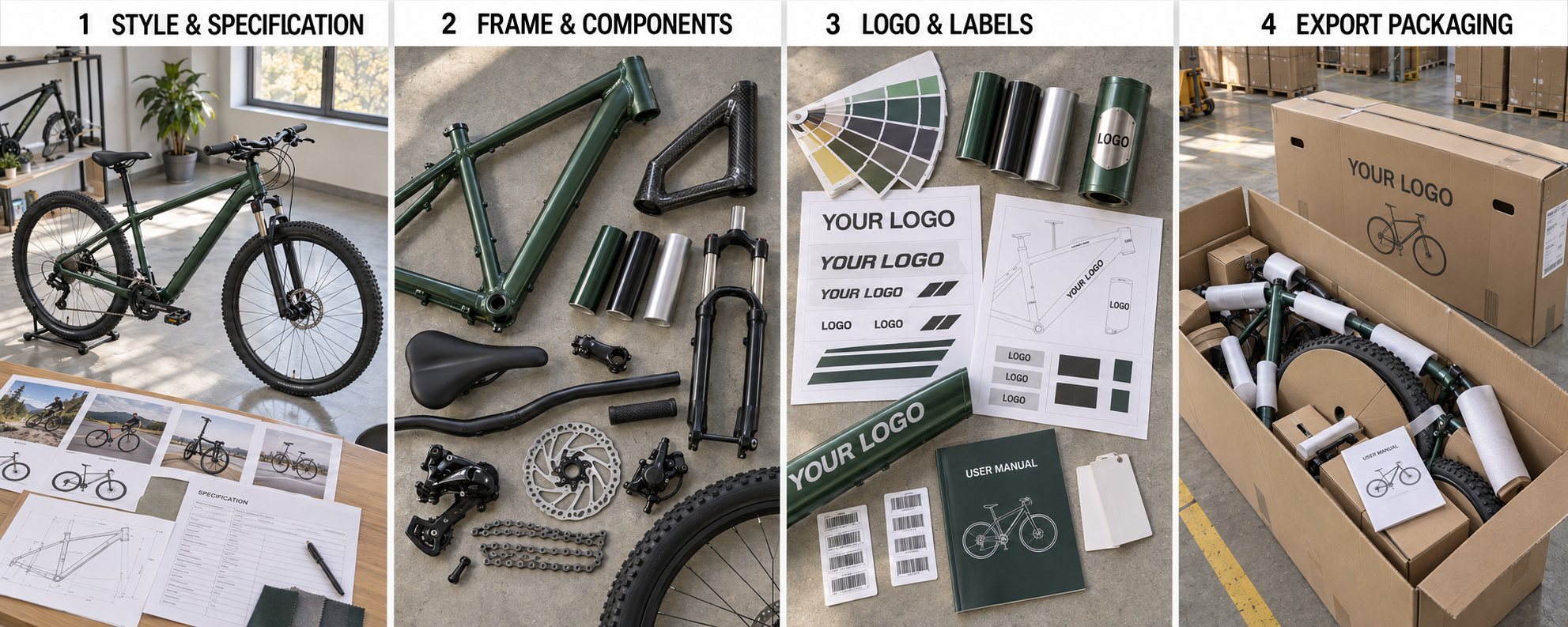
Tovin Bike develops custom and OEM bicycle programs for importers, distributors, wholesalers, retail chains and private label brands. Projects can begin with an existing bicycle model, a buyer’s specification sheet or a reference sample.
Our product scope includes mountain bikes, road bikes, electric bikes, fat tire bikes, folding bikes, city bikes and kids bikes. Selected electric scooter and bicycle accessory programs can also be reviewed according to the project.
Customization normally covers the frame setup, wheel size, component BOM, color, logo or decals, labels, manuals and export packaging. The available options depend on the selected model, component supply, order quantity and destination-market requirements. Buyers who need more extensive changes can review our Custom Bike Development process before requesting a quotation.
Product Specification and Component BOM
A reliable OEM order starts with a confirmed specification rather than a product image alone. We first review the bicycle type, intended market, wheel size, frame material and size, brake system, drivetrain, suspension and required accessories. Motor, battery, controller and display details must also be confirmed for electric bicycle projects.
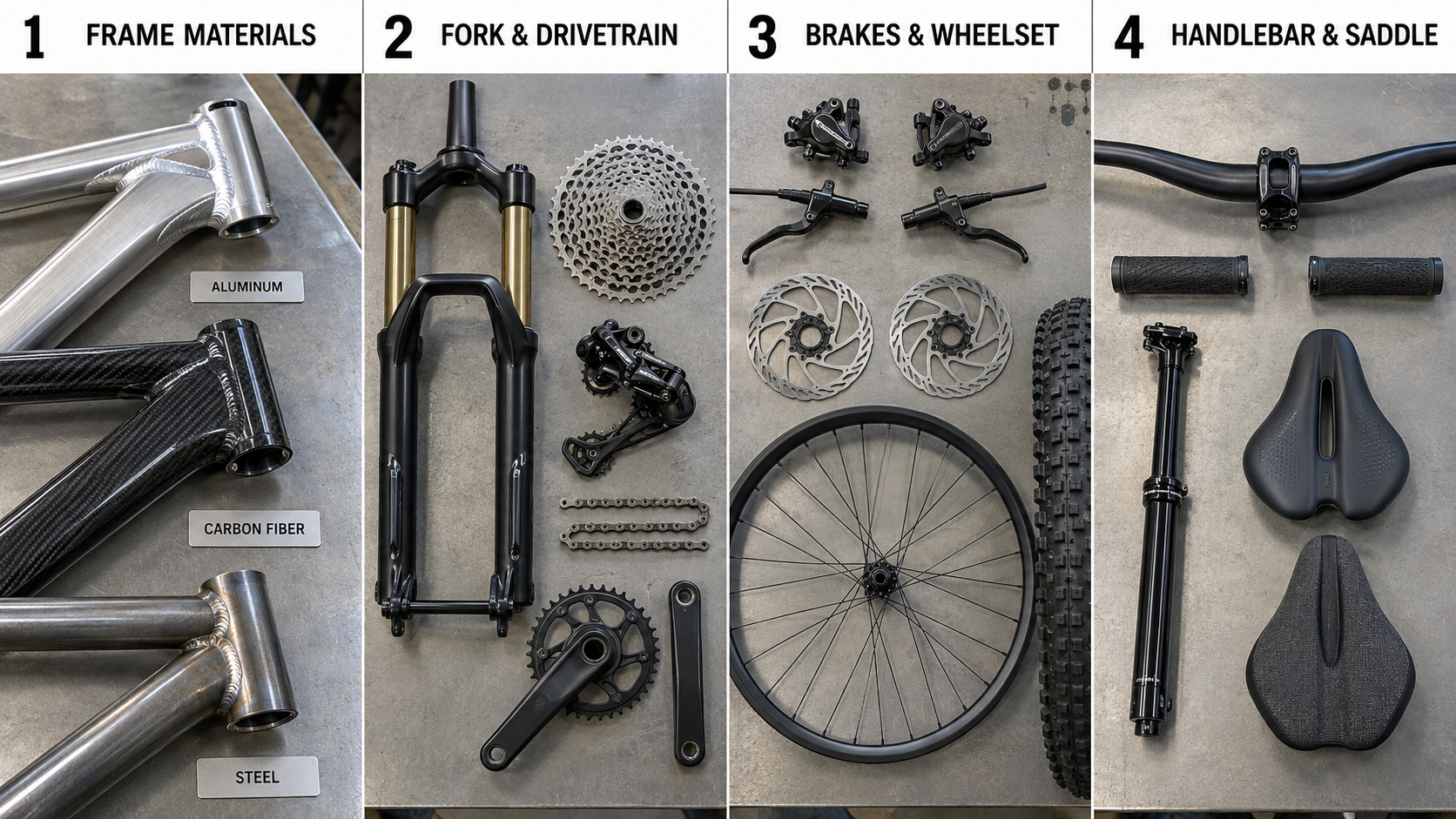
Frame options may include aluminum alloy, carbon fiber or selected steel structures where available. Forks, brakes, drivetrains, wheels, tires, saddles, handlebars, racks, fenders and other parts are then selected around the required performance level and target cost.
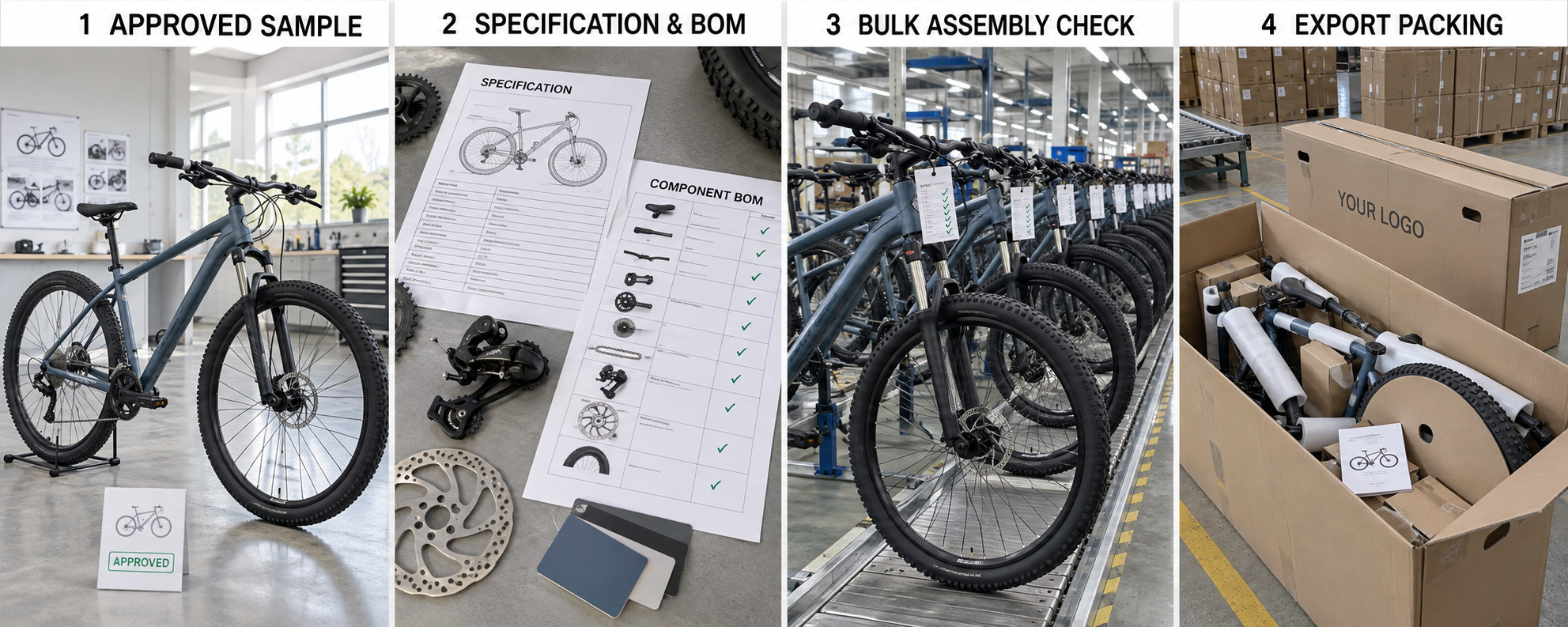
The approved component BOM becomes the reference for sampling, purchasing, assembly and final inspection. If a specified component is unavailable, any proposed substitution should be reviewed before bulk production rather than changed without approval. More detailed options are covered under Material & Component Selection.
 Frame Color, Logo and Brand Details
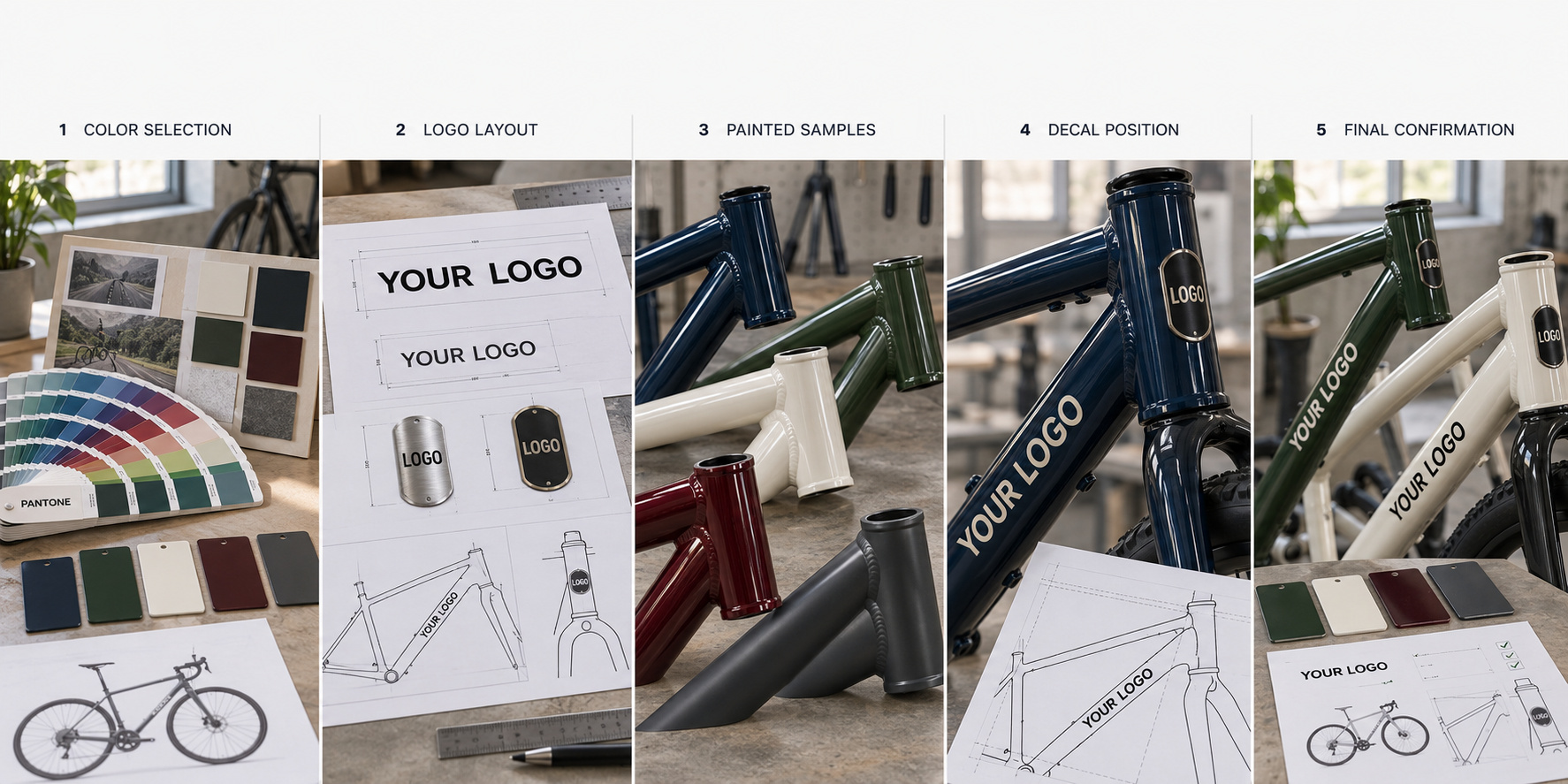
Color and branding are confirmed after the product platform and main components are selected. Buyers can provide a Pantone reference, logo artwork, decal layout or an existing branded sample. We review the application position, dimensions, color, orientation and compatibility with the selected frame finish.
Branding may include frame decals, head-tube graphics, model markings, product labels, barcode labels and selected component branding where practical. Vector artwork is preferred because it reduces distortion and helps maintain consistent sizing across different bicycle models.
An artwork proof or physical sample should be approved before bulk production. Available finishes and branding methods vary by frame material and model, so they are confirmed individually rather than offered as unrestricted options. See Color & Finish Customization for the approval points used in color and surface development.
 Private Label Packaging and Documentation
Private label support can extend beyond the bicycle itself. Depending on the order, we can confirm product labels, barcode information, warning labels, user manuals, assembly instructions, accessory packs, shipping marks and printed cartons.
Packing must match the bicycle type, wheel size, disassembly level and shipping plan. Standard export cartons are commonly used, while branded cartons can be developed after the artwork, printing details and quantity are confirmed. SKD or CKD packing can be discussed where applicable.
Custom packaging affects carton dimensions, loading quantity, material preparation and lead time. Buyers should therefore provide packaging files and destination requirements early in the project rather than after production has started.
Sample Development and Pre-Production Approval
A sample is used to confirm the actual bicycle specification before mass production. Standard samples generally require around 7–15 days. Customized samples commonly require around 15–30 days, depending on frame availability, component selection, color, decals and packaging requirements.
Sample approval should cover the bicycle model, frame setup, component BOM, appearance, branding, fitment and agreed packaging details. Comments and revisions need to be recorded clearly so that the final approved version can serve as the production reference.
Sample cost and delivery charges are quoted according to the selected configuration and destination. If major components, colors or artwork change after approval, additional sample time and cost may be required. The complete confirmation sequence is explained on our Sample Development & Approval page.
 MOQ, Lead Time and Bulk Production
Standard bicycle programs usually start at approximately 100–300 units per model. Customized OEM projects commonly start at around 300–1,000 units per model or color. Actual MOQ depends on the frame platform, component specification, color quantity, branding and packaging.
Bulk production normally requires about 25–45 days after the sample, BOM, artwork and packing details are approved and the deposit is received. Complex OEM specifications, special components, multiple colors or electric systems may require additional time.
Production follows the approved specification, with checks covering component consistency, frame and finish, wheel alignment, spoke tension, brake and shifting adjustment, key fasteners, finished function and packing condition. Electrical functions are checked on applicable e-bike models.
Information Required for an OEM Quote
For an accurate quotation, please provide:
- Bicycle type and target market
- Wheel size, frame material and frame size
- Drivetrain, brake and suspension requirements
- Motor and battery details for electric models
- Quantity by model and color
- Logo, decal and label files
- Manual and packaging requirements
- Destination country or port
- Preferred EXW, FOB, CIF or DDP term
- Required inspection or market documentation
Clear specifications allow us to identify feasible options, calculate the correct MOQ and prepare a practical sample and production schedule.