


Integrating the Electrical System With the Bicycle Platform
Electric bike integration involves more than installing a motor and battery onto an existing bicycle. The frame, motor system, battery position, controller, display, sensors, brakes, drivetrain and wiring must work together as one approved configuration.
Tovin Bike supports electric bike programs for importers, distributors, wholesalers and private label mobility brands. Each project begins with the intended bike type, target market, wheel size, frame structure, electrical specification, mechanical components, order quantity and packaging requirements.
We integrate approved electrical and bicycle components during sample and bulk production. This page describes system matching and assembly support; it does not imply that motors, battery cells or controllers are manufactured in-house.
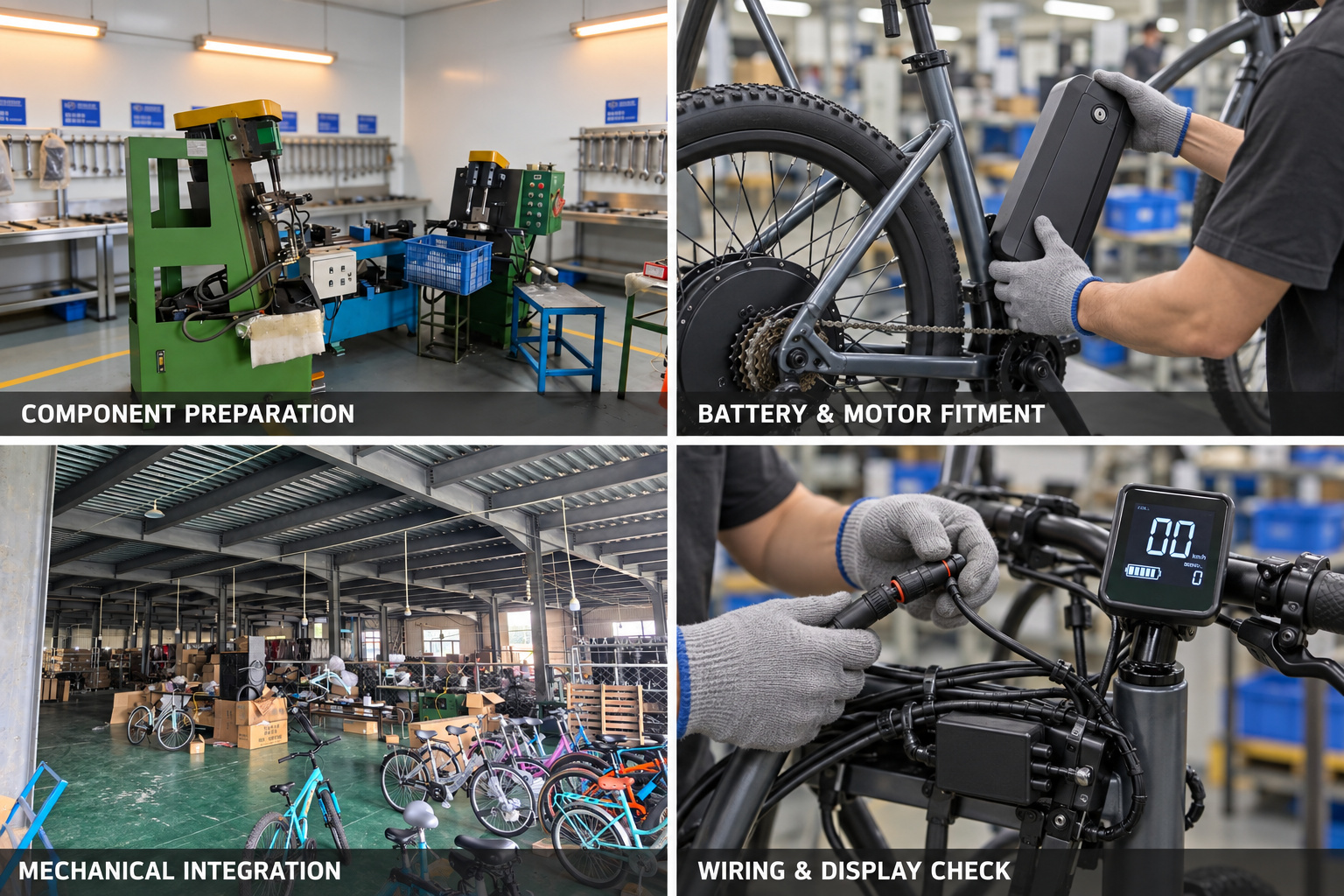 Motor, Battery and Controller Configuration
The electrical system is selected according to the bicycle platform and agreed project requirements. Important points include motor position, rated power, battery voltage and capacity, controller compatibility, display functions, sensor type, charger specification and connector layout.
Motor selection may involve front hub, rear hub or other available drive arrangements, depending on the frame and intended model. Battery placement must be compatible with the frame structure, mounting system, available space and removal method. The controller and wiring layout also need sufficient clearance and suitable routing to reduce interference during assembly and packing.
Electrical specifications affect product cost, weight, appearance, expected performance and component availability. Buyers should provide their required market, power level, battery specification and target price range before the BOM is finalized. Available electrical components can be reviewed together with the mechanical options through Material & Component Selection.
Mechanical and Electrical Compatibility
An electric bicycle must retain practical bicycle function after the electrical system is installed. The motor and battery configuration must be considered together with the frame, fork, wheels, brakes, drivetrain and cockpit components.
During specification confirmation, we review items such as motor fitment, dropout compatibility, wheel size, brake arrangement, chain line, battery clearance, cable routing and display installation. Electric mountain, city and folding bikes require different integration decisions because their frame structures, suspension systems, riding positions and packing methods differ.
Brake cut-off functions, pedal-assist sensors, throttles or other control components are included only where specified and applicable. Buyers should identify destination-market requirements before sampling because electrical specifications, labels, charger plugs and documentation may vary by market.
Wiring, Display and Control Installation
Wiring is prepared and connected according to the approved electrical configuration. Connectors should be matched correctly and routed to avoid unnecessary tension, sharp bends or interference with steering, folding joints, wheels and moving components.
Displays, control buttons, brake levers and other cockpit parts must be positioned without obstructing normal handlebar operation. After installation, the system is checked for power activation, display response, assistance operation, battery fitment and basic control functions.
The agreed connector type, cable length, routing and visible wire arrangement should be confirmed during sample development. Unapproved changes can affect appearance, maintenance and compatibility across a repeat order.
Sample Integration and Pre-Production Approval
A sample is used to confirm how the electrical and mechanical systems work together before bulk production. The review covers component models, installation, cable routing, display operation, battery mounting, motor assistance, braking, shifting, color, decals and packaging details.
Any required change should be recorded in the specification and BOM before production approval. The approved sample becomes a practical reference for assembly and final inspection. Buyers developing a new electrical configuration can use the Sample Development & Approval process to confirm the system before placing a bulk order.
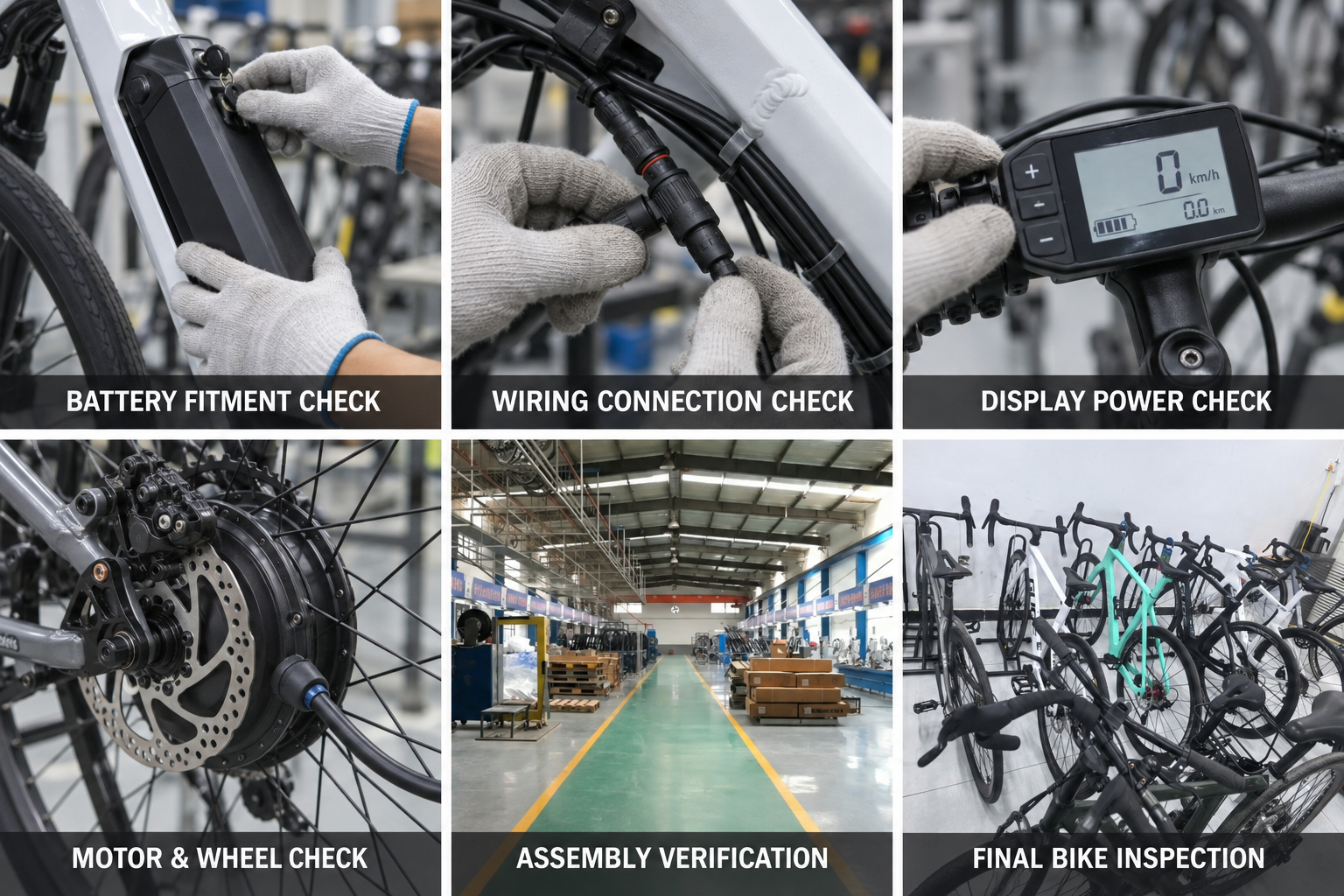 Bulk Production and Functional Inspection
During bulk assembly, electrical components are checked against the approved BOM before installation. Finished checks may include power on and off, display response, motor assistance, battery installation, wiring connections and brake-related electrical functions where applicable. Mechanical checks cover wheel alignment, brakes, shifting, steering, key fasteners and overall appearance.
These are production-level integration and functional checks. Laboratory testing, certification and market-specific compliance must be confirmed separately for the applicable model and destination. Independent inspection can also be coordinated when the scope and schedule are agreed before shipment.
Final verification and export preparation continue through the Final Inspection & Packing process.
Information Needed for an Electric Bike Integration Quote
For an accurate review, provide the electric bike type, frame and wheel size, motor position and power, battery voltage and capacity, controller, display, sensor, brake system, drivetrain, quantity, branding, packing method and destination market.
Standard samples usually require approximately 7–15 days, while customized samples commonly require 15–30 days. Bulk production is normally around 25–45 days after specification approval, sample confirmation and deposit, subject to electrical component availability and project complexity.