


Assembly Follows the Approved Bicycle Specification
Bicycle assembly begins after the frame finish, component BOM, color, branding and packaging requirements have been approved. The production reference should identify the exact parts required for each model, size and color so that purchasing, assembly and inspection teams work from the same specification.
Tovin Bike assembles mountain bikes, road bikes, electric bikes, fat tire bikes, folding bikes, city bikes and kids bikes for importers, distributors, wholesalers and private label brands.
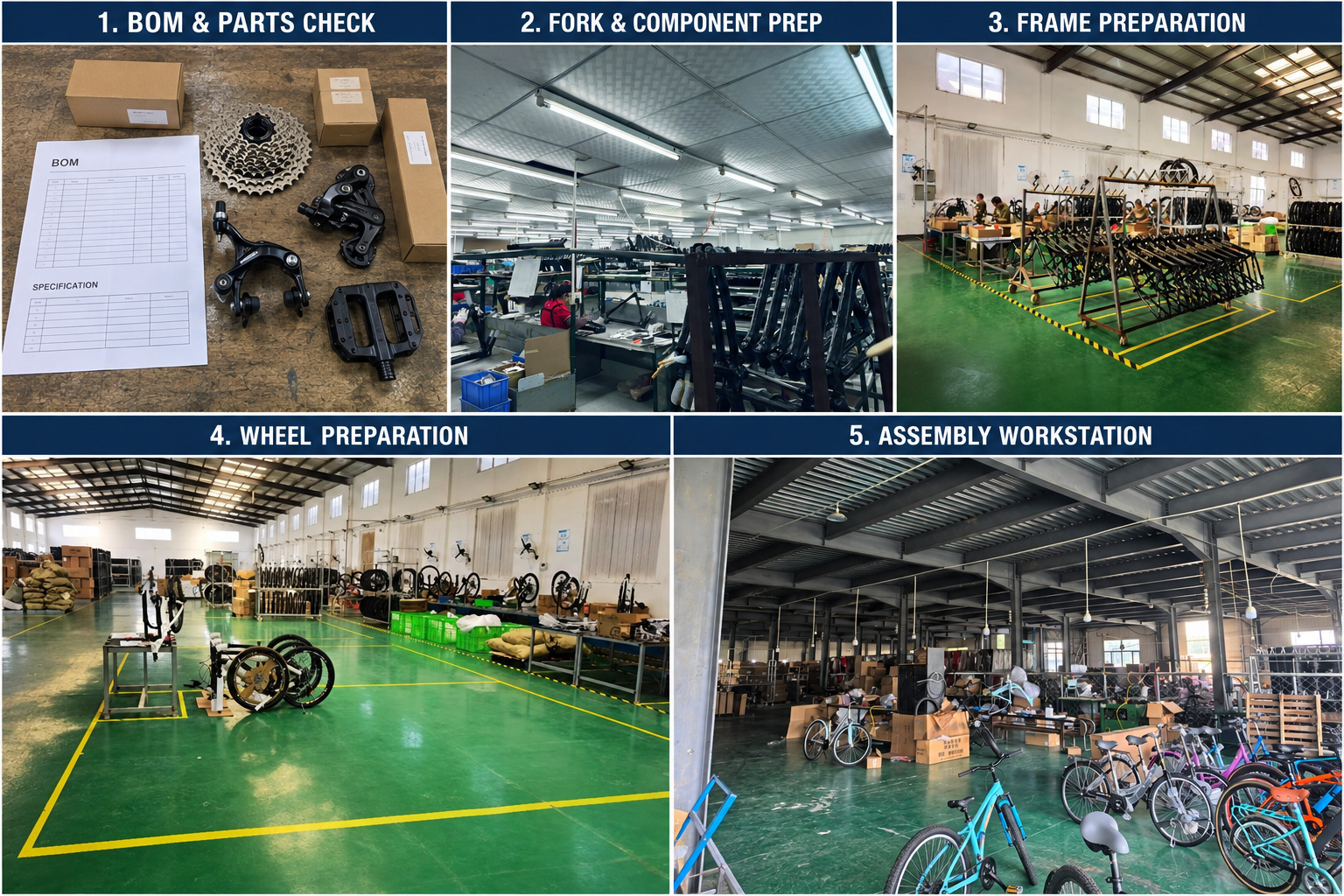
Before bulk assembly, components are prepared by order and checked against the approved BOM. Any proposed component substitution should be confirmed before installation because a change in drivetrain, brake, fork, wheelset or cockpit parts can affect cost, compatibility and finished performance.
Frame, Fork and Wheel Preparation
Finished frames and forks are checked for visible surface damage, alignment concerns and the required mounting interfaces before entering assembly. Frame size, wheel size, brake mounts and cable routing must match the selected component configuration.
Wheelsets are prepared according to the model specification. Rim type, hubs, spokes, tires, tubes or tubeless-related parts, freewheel or cassette and brake interfaces should correspond to the approved order.
Wheel alignment and spoke condition affect ride quality and later adjustment. Our wheel building and testing page explains the wheel-related checks completed before finished-bike release.
 Component Installation Sequence
Components are fitted in a controlled sequence so that cable routing, fasteners and connected parts can be checked during assembly. The exact sequence varies by bicycle type, but commonly includes:
- Fork, headset and steering components
- Bottom bracket, crankset and pedals
- Wheels, tires and braking components
- Drivetrain and shifting components
- Handlebar, stem, grips or bar tape
- Saddle and seat post
- Racks, fenders, stands and model-specific accessories
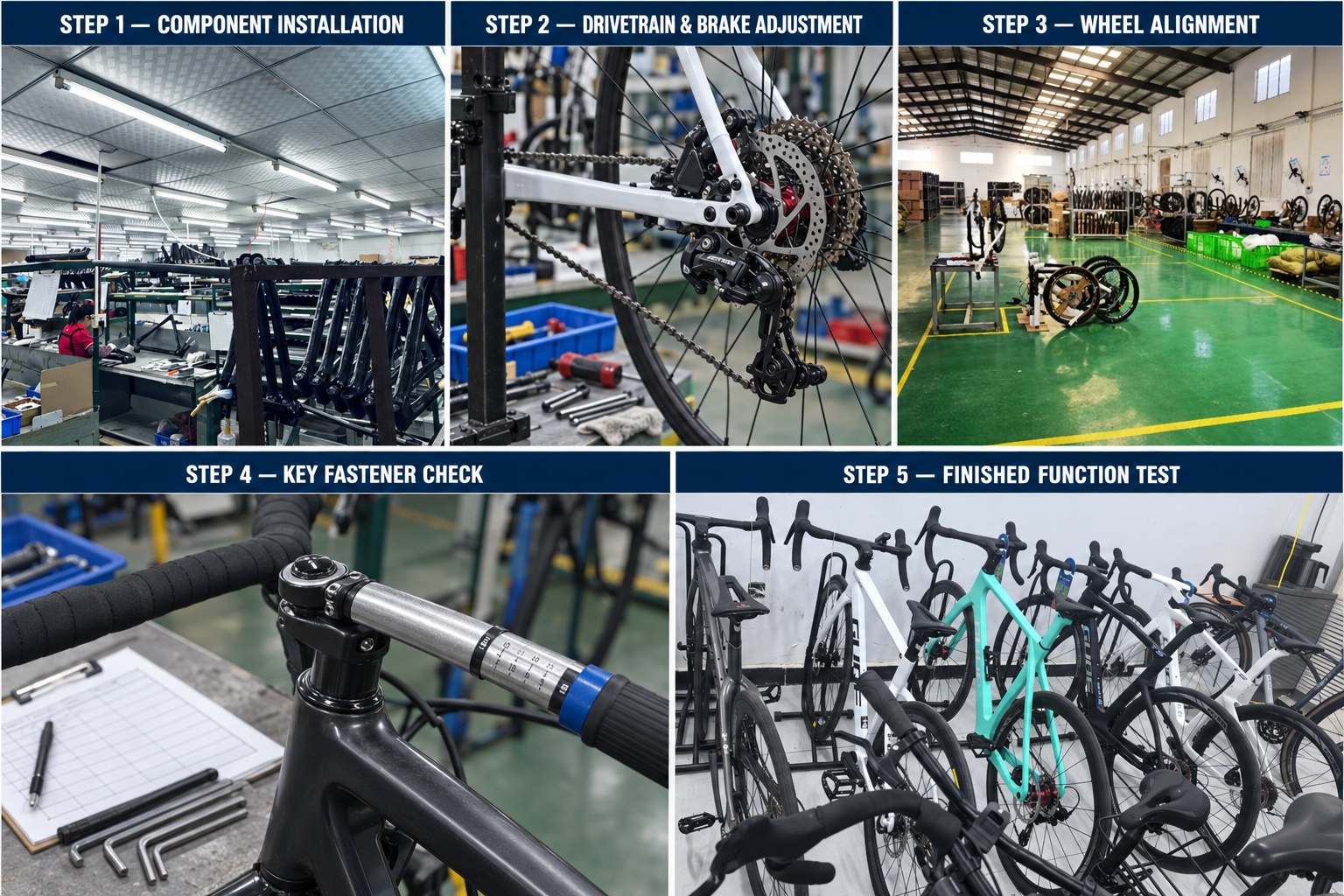
Component identity and installation position are checked against the BOM. Key fasteners require appropriate tightening, and cables or hoses should be routed without unnecessary interference.
More detailed installation points are covered on our component installation page.
Brake, Shifting and Steering Adjustment
A bicycle is not complete when the components are only attached. Mechanical systems must be adjusted so the finished bike operates as intended.
Brake checks include lever operation, pad or caliper position, rotor or rim clearance and braking response. Drivetrain checks cover gear selection, chain movement, derailleur adjustment and obvious interference. Steering should move correctly, while the handlebar, stem, saddle and other key parts must be securely positioned.
Folding bicycles require additional checks of the folding mechanism and locking points. Suspension models should be reviewed according to the installed fork or rear suspension configuration.
Electric Bicycle Integration
Electric bicycle assembly includes the mechanical process together with the installation and connection of the motor, battery, controller, display, sensors, wiring and charger-related components.
The electrical system must follow the approved voltage, capacity, motor and control specification. Connectors, cable routing and mounting positions should be confirmed before bulk assembly to reduce rework.
Our electric bike integration page provides more detail on electrical component matching and function checks.
Finished Assembly Inspection
Completed bicycles are checked against the approved sample and specification. Inspection points may include frame and finish condition, wheel alignment, spoke tension, brake response, shifting function, steering, key fasteners, accessories and electrical functions where applicable.
Branding details such as frame decals, model labels, manuals and required accessories are also verified before packing.
 Packing Preparation and Production Records
After inspection, bicycles are prepared for the agreed packing method. Removable parts and accessories are arranged according to the confirmed assembly level, including SKD or CKD packing where applicable.
Protective materials, manuals, labels, carton marks and included components are checked before cartons are closed. Further details are available on our final inspection and packing page.
For quotation and assembly planning, buyers should provide the bicycle model, frame and wheel size, component BOM, order quantity by color, branding, packing method and destination. Sample approval and component availability must be confirmed before the bulk production schedule is finalized.