


Processing Begins with an Approved Frame Specification
Frame welding and processing affect bicycle structure, component fitment, wheel alignment and the efficiency of final assembly. Before work begins, the frame material, size, geometry, tube structure, brake mounts, cable routing and accessory mounting points must be confirmed.
This page mainly applies to suitable aluminum alloy and steel frame programs. The exact production route depends on the selected frame platform and bicycle type. Carbon fiber frames use a different manufacturing process and should not be treated as welded metal frames.
For OEM buyers, the first decision is whether to use an existing frame platform or develop a substantially modified structure. Existing platforms normally reduce tooling requirements, sample time and production risk. New structures or major geometry changes require a separate feasibility review before MOQ, development cost and lead time can be confirmed.
Tube and Frame Part Preparation
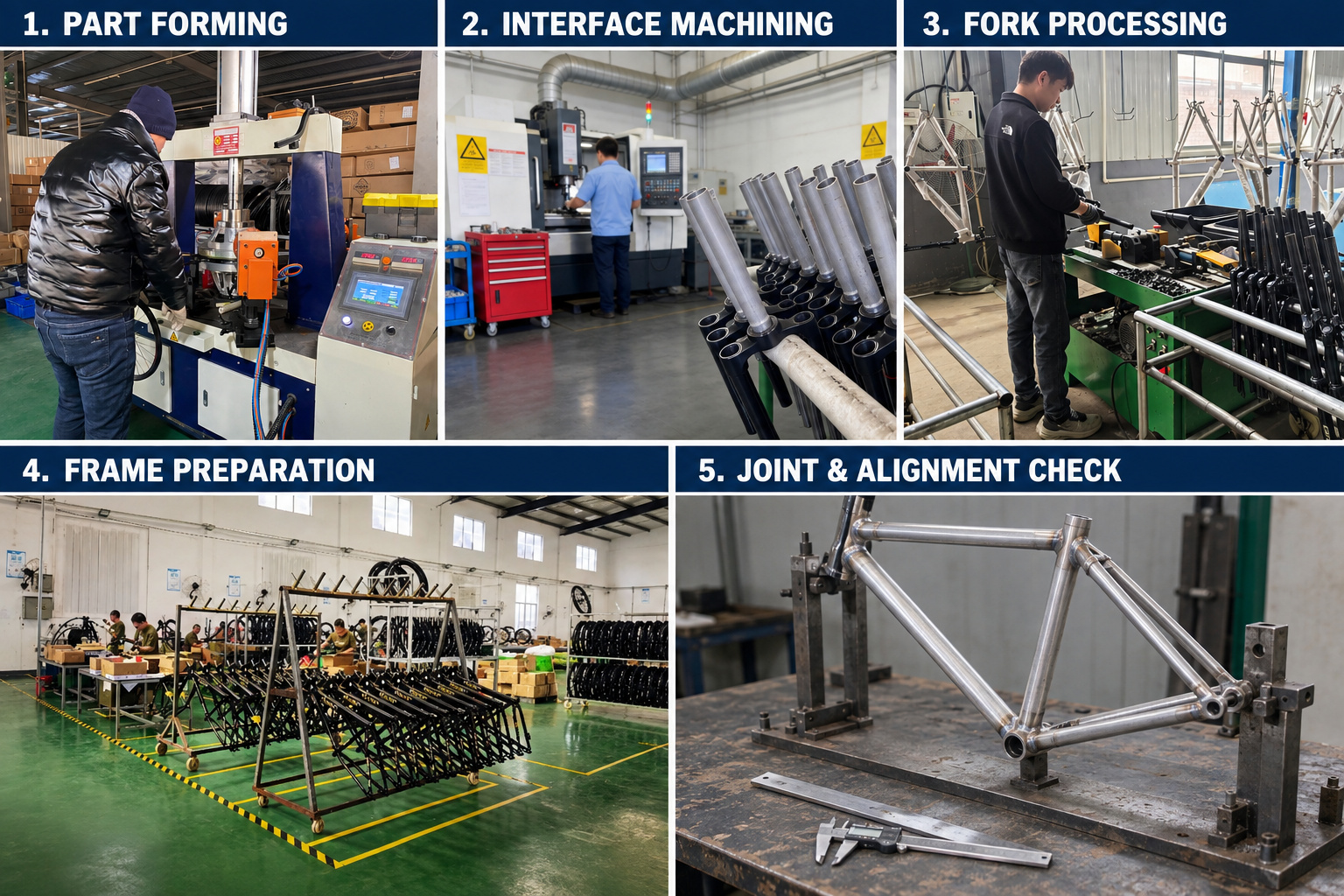
Metal frame production may begin with tube and frame-part preparation according to the approved specification. Depending on the model, this can include cutting, forming, machining and preparing connection areas before joining.
Processing details influence how accurately the head tube, bottom bracket area, seat tube, rear stays and mounting interfaces fit together. Openings for internal cable routing, bottle cages, racks, fenders or electric bicycle systems must correspond to the confirmed configuration.
Buyers with specific dimensions or riding-position requirements should complete the frame design and geometry review before sample production.
 Welding and Frame Joining
For applicable metal frames, prepared sections are positioned in fixtures before welding or joining. Stable positioning helps control the relationship between the main frame sections and reduces dimensional variation during production.
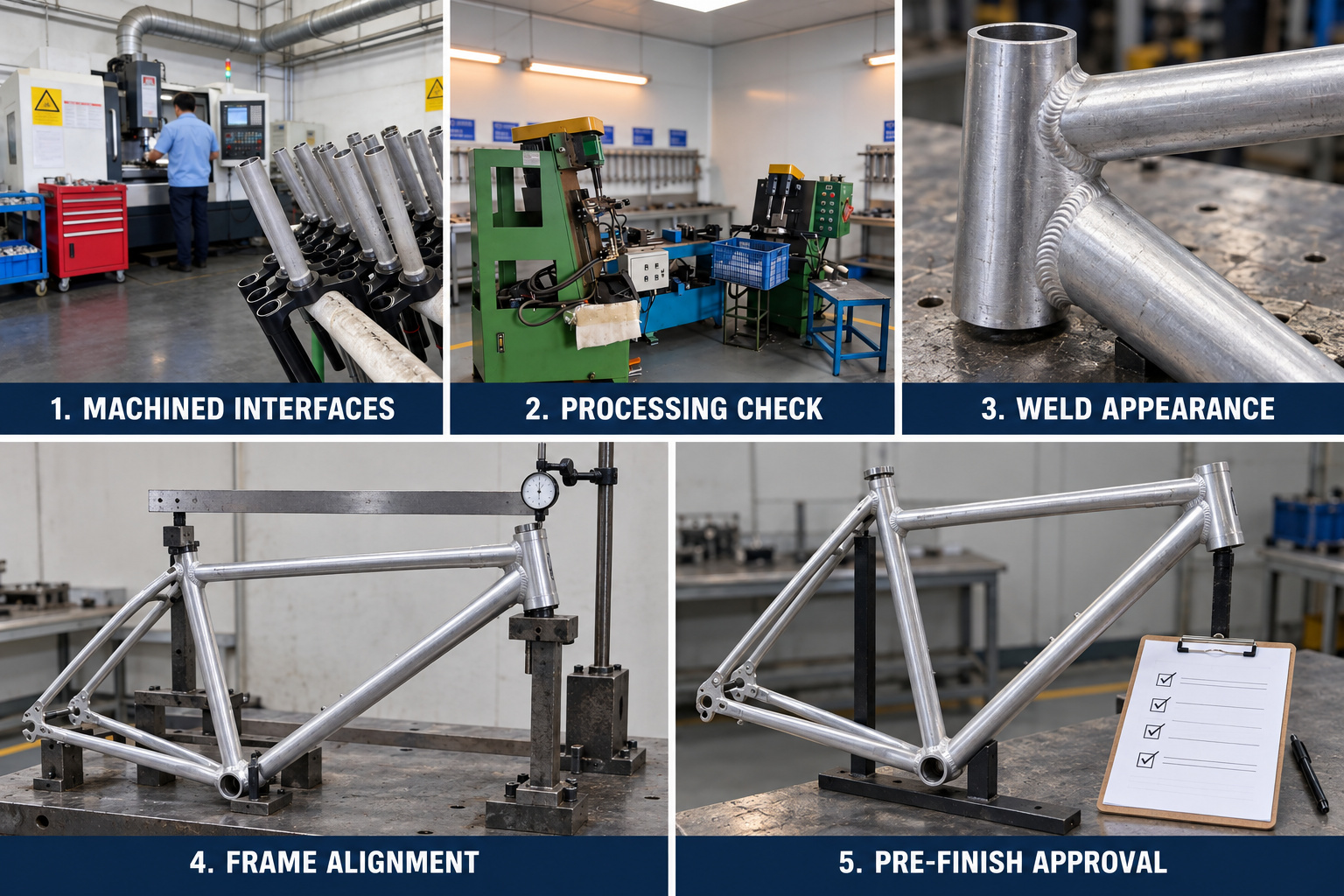
Weld appearance is only one inspection point. Buyers are usually more concerned with whether the completed frame maintains the required alignment, accepts the specified components and can be repeated consistently across the bulk order.
The required joining method and inspection points vary by material and frame design. These details should be verified for the selected model rather than described as a single process for every bicycle frame.
A broader explanation of frame materials, model selection and production preparation is available on our bike frame manufacturing page.
Machining and Mounting Interfaces
After joining, applicable frame areas may require additional processing so that components can be installed correctly. Key interfaces can include the head tube, bottom bracket area, brake mounts, dropouts, seat tube and threaded mounting points.
For electric bicycles, frame processing may also need to accommodate the battery enclosure, motor interface, controller position and cable routing. These requirements should be included in the drawing or approved specification before the frame enters production.
Incorrectly positioned or unfinished interfaces can cause problems during headset installation, wheel fitting, brake alignment or drivetrain assembly. Checking these areas before painting helps reduce later rework.
Alignment and Pre-Finishing Checks
Before surface finishing, the frame should be checked against the approved dimensions and intended component setup. Inspection points may include overall alignment, wheel positioning, head tube and seat tube relationship, mounting points, openings and visible joining condition.
The inspection method depends on the frame structure and purchasing requirements. A buyer may request dimensional records, sample photographs or additional verification for project-critical areas.
 From Approved Frame to Surface Finishing
Once the frame structure and interfaces have been accepted, it can proceed to cleaning, surface preparation, color application and decal work. Color, gloss level, logo placement and finish samples should be approved before bulk processing. See our surface treatment and painting page for the next production stage.
After finishing, frames receive an appearance and configuration check before entering the bike assembly process.
For project review, provide the bicycle type, frame material, wheel and frame size, geometry or reference model, brake system, mounting requirements, quantity and target market. Tooling, sample time, MOQ and production lead time are confirmed after the processing scope has been evaluated.