


Final Inspection Before Bicycle Packing
Final inspection confirms that completed bicycles match the approved specification, component BOM, sample and private label requirements before export packing.
Tovin Bike carries out finished-product checks for mountain bikes, road bikes, electric bikes, fat tire bikes, folding bikes, city bikes and kids bikes supplied to importers, distributors, wholesalers, retail chains and private label brands.
Inspection scope depends on the bicycle type, component configuration, order requirements and destination market. The purpose is to identify visible, functional, specification or packing issues before the bicycles are closed in export cartons.
Specification and Component Verification
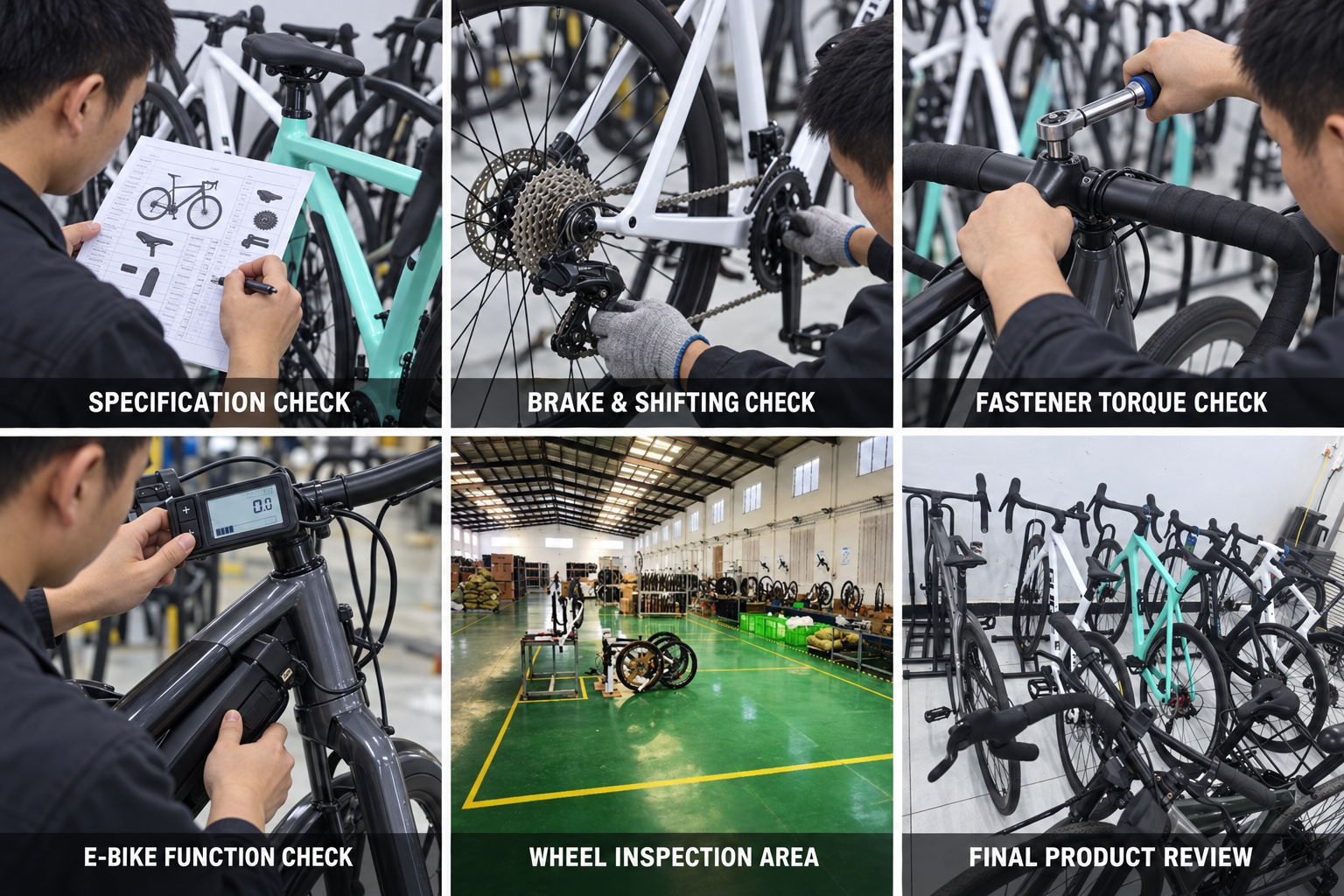
The finished bicycle is compared with the approved production information. The review covers the model, frame material and size, wheel size, fork, drivetrain, brake system, tires, saddle, cockpit parts and specified accessories.
Component brands or models are checked against the approved BOM where required. Unconfirmed substitutions can affect function, appearance, market positioning and spare-part planning, so any material change should be reviewed before shipment.
For private label programs, the approved sample and confirmation records from Sample Development & Approval remain important references during the final inspection.
 Appearance, Branding and Label Check
The frame and fork are checked for visible marks, finish condition and color consistency. The inspection also covers decal content, logo position, model labels and other approved branding details.
Artwork must match the confirmed version used for production. Spelling, placement and color differences should be identified before packing, particularly when several models or colors are produced in the same order.
Labels, manuals, barcode information and carton artwork are checked where included in the private label program. Requirements for branded cartons and shipping labels can be confirmed through Custom Packaging & Labels.
Mechanical and Functional Inspection
Mechanical checks focus on the areas that affect assembly quality and normal bicycle operation. These may include:
- Wheel alignment and rotation
- Spoke condition and tension
- Brake response and rotor clearance
- Gear shifting and chain movement
- Steering alignment
- Fork or suspension operation
- Folding and locking function where applicable
- Key fasteners
- Saddle, handlebar and accessory fitment
Wheel-related findings are checked against the production controls described under Wheel Building & Testing.
Electric bicycle inspections may also cover power activation, display response, battery fitment, wiring connections, motor assistance and brake-related electrical functions where applicable. These are production-level functional checks and do not replace separate laboratory testing or market-specific certification.
Packing Method and Contents Check
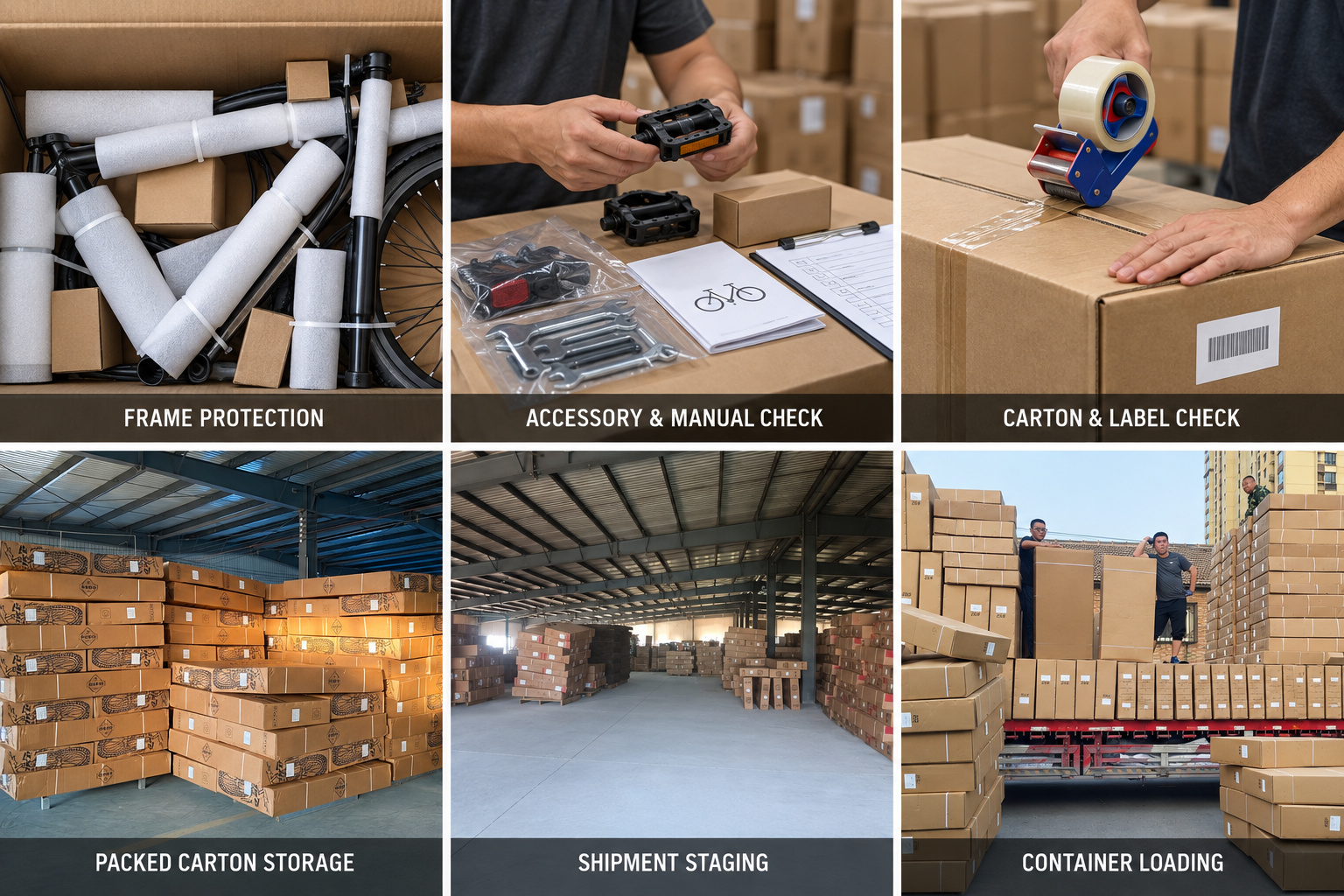
After inspection, bicycles are partially disassembled according to the agreed packing method. Handlebars, front wheels, pedals, saddles or other components may be repositioned or packed separately depending on the bicycle model and carton plan.
Protective materials are applied to reduce contact between painted surfaces, metal parts and loose components during handling. The packing check confirms that specified accessories, manuals, tools, chargers and separately packed parts are included.
SKD or CKD packing can be discussed where suitable. The selected method affects carton size, container loading, freight cost and the assembly work required after arrival.
 Carton Labels and Shipment Preparation
Completed cartons are checked for model identification, quantity, barcode information and shipping marks according to the confirmed order. Packing condition and carton closure are reviewed before the goods enter the finished-product storage or loading area.
Order quantity, model mix and carton dimensions are used to coordinate loading and shipment arrangements. EXW, FOB, CIF or DDP terms may be discussed according to the destination, order volume and confirmed logistics route.
Third-party pre-shipment inspection can be coordinated when the buyer provides the required inspection scope and confirms the timing before loading.
Information Required for Packing Approval
Buyers should provide the packing method, carton artwork, labels, barcodes, manuals, accessory list, shipping marks, destination and any inspection requirements before bulk packing begins.
Bulk production is generally around 25–45 days after sample approval, deposit and specification confirmation. Final packing and shipment timing depends on order quantity, model mix, inspection arrangements, carton requirements and the confirmed logistics schedule.