


Frame Production Starts with the Bicycle Specification
The frame determines the bicycle’s structure, fit, component compatibility and finished appearance. Before frame production or preparation begins, we confirm the bicycle type, frame material, frame size, wheel size, geometry or existing frame platform, fork compatibility, brake system and required mounting points.
Tovin Bike supports frame programs for mountain bikes, road bikes, electric bikes, fat tire bikes, folding bikes, city bikes and kids bikes. Available materials include aluminum alloy, carbon fiber and selected steel options, depending on the model and project requirements.
Importers, distributors and private label bicycle brands can develop an order from an existing frame platform, a buyer specification or an approved reference sample. Projects requiring significant structural changes need a separate feasibility review because new tooling, testing, MOQ and development time may be involved.
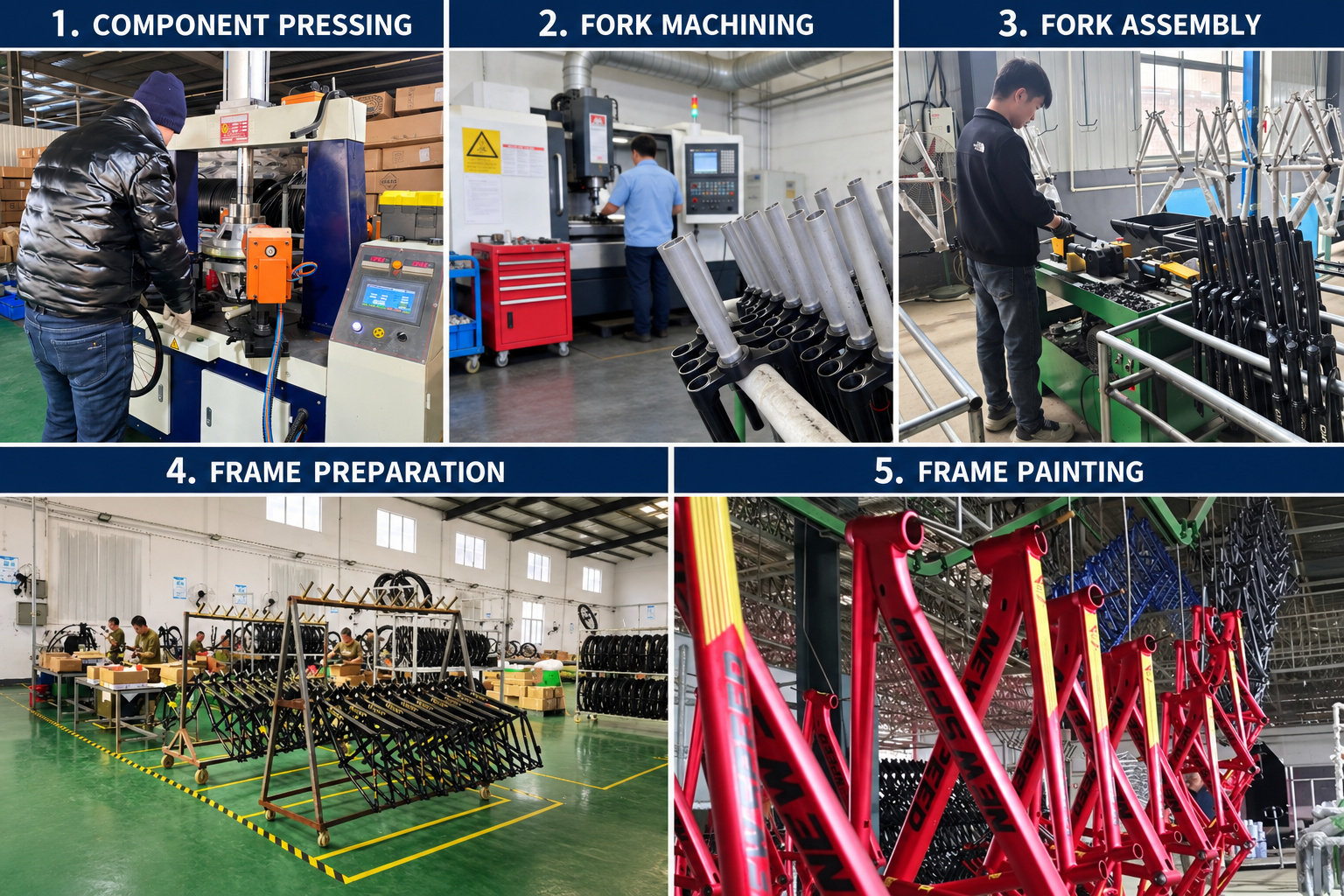 Frame Material and Structure Confirmation
Frame material affects weight, cost, production method, surface finish and intended application. Aluminum alloy is commonly selected for mountain bikes, road bikes, city bikes and electric bicycles where buyers require a balance between weight and cost. Steel may be used for selected value-oriented, city, kids or specialty models. Carbon fiber options are normally evaluated according to the available frame platform and target specification.
Material selection alone is not enough for an accurate quotation. Buyers should also confirm:
- Bicycle and frame type
- Wheel and frame size
- Required geometry or existing frame model
- Suspension or rigid setup
- Brake mounting system
- Cable routing requirements
- Rack, fender, bottle cage or battery mounting points
- Target component configuration
- Order quantity by size and color
More extensive size, structure or fit requirements should be reviewed through our frame design and geometry process before sampling.
Frame Processing and Structural Details
The exact manufacturing route depends on the frame material and approved model. For applicable metal-frame projects, production may include tube or part preparation, forming, machining, joining, alignment and preparation of mounting interfaces. Existing frame platforms generally require less development than a completely new frame structure.
Processing accuracy affects headset installation, bottom bracket fitment, wheel positioning, brake alignment and component assembly. Mounting points and openings must correspond to the approved specification, particularly on electric bicycles requiring battery, motor, controller or cable integration.
The frame welding and processing page explains the structural and dimensional points that should be confirmed for applicable metal-frame programs. Production methods must be verified by frame type rather than assumed to apply to every material.
Surface Preparation, Color and Finish
After structural processing, the frame surface is prepared for the confirmed finish. The available process depends on the frame material, required color, gloss level and model.
For OEM and private label orders, buyers should provide a Pantone reference where controlled color matching is required. Logo or decal artwork, placement, dimensions and orientation should also be approved before bulk application.
Physical samples are especially useful when the project includes a specific metallic effect, matte or gloss finish, multiple colors or detailed decal positioning. Our surface treatment and painting page covers the main confirmation points for frame color and appearance.
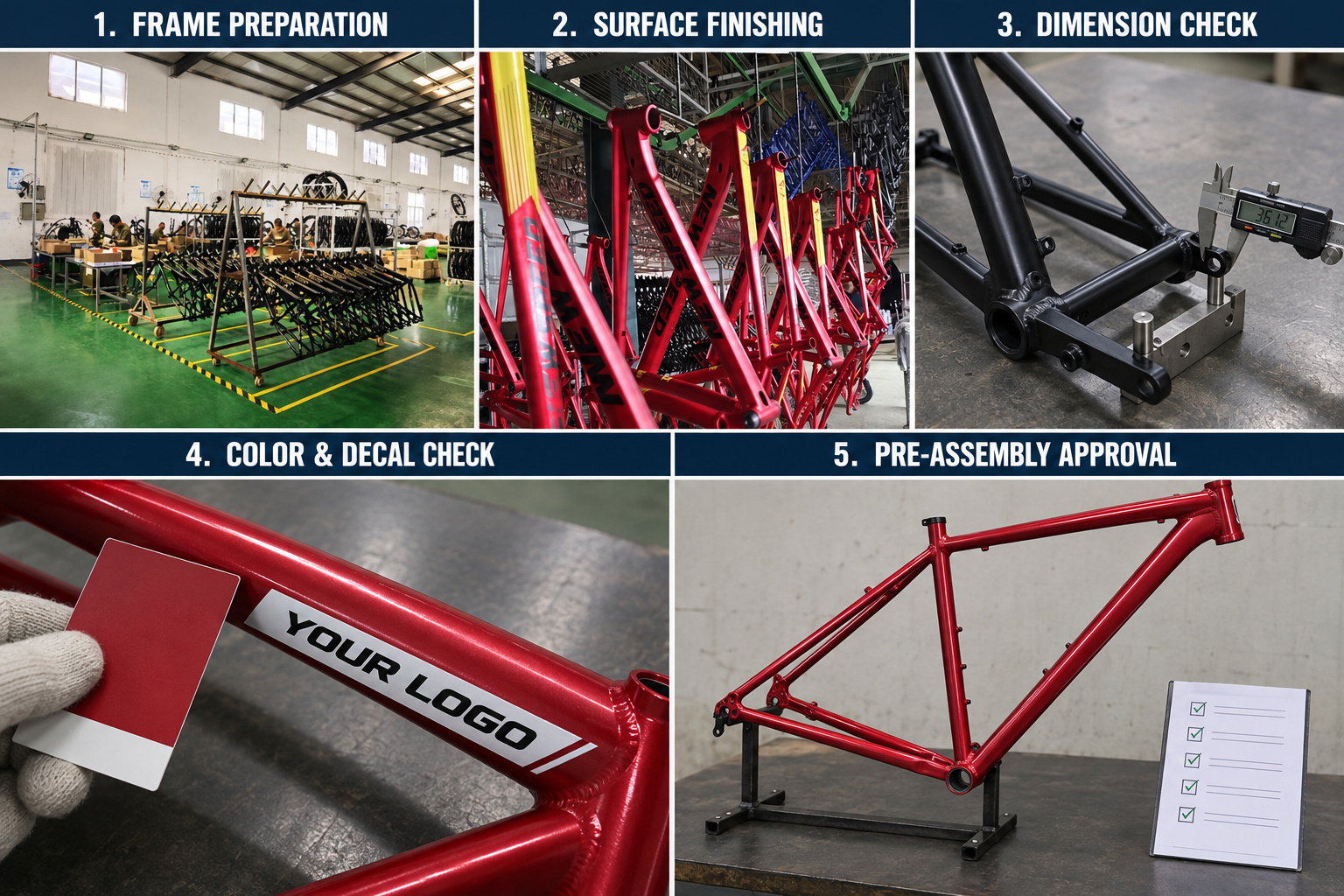 Frame Inspection Before Bicycle Assembly
Frame inspection should take place before components are installed. Finding a dimensional, alignment or finish problem after full assembly creates avoidable rework and can delay production.
Checks may include visible frame and fork condition, alignment, mounting points, threads, openings, brake interfaces, surface appearance, color consistency and decal placement. The inspection reference should be the approved drawing, specification or sample.
Approved frames then move into the bike assembly process, where component fitment provides an additional practical check of the confirmed frame configuration.
Information Needed for a Frame Project
For quotation and feasibility review, send the bicycle type, frame material, wheel size, frame sizes, required structure, component specification, color, logo artwork, estimated quantity and destination market.
If an existing bicycle, drawing or reference sample is available, clearly indicate which details must be matched and which may be adjusted. MOQ, sample time, tooling requirements and bulk lead time are confirmed after the frame platform and development scope have been reviewed.