


 Bicycle Production Based on an Approved Specification
Tovin Bike manufactures mountain bikes, road bikes, electric bikes, fat tire bikes, folding bikes, city bikes and kids bikes for importers, distributors, wholesalers and private label brands.
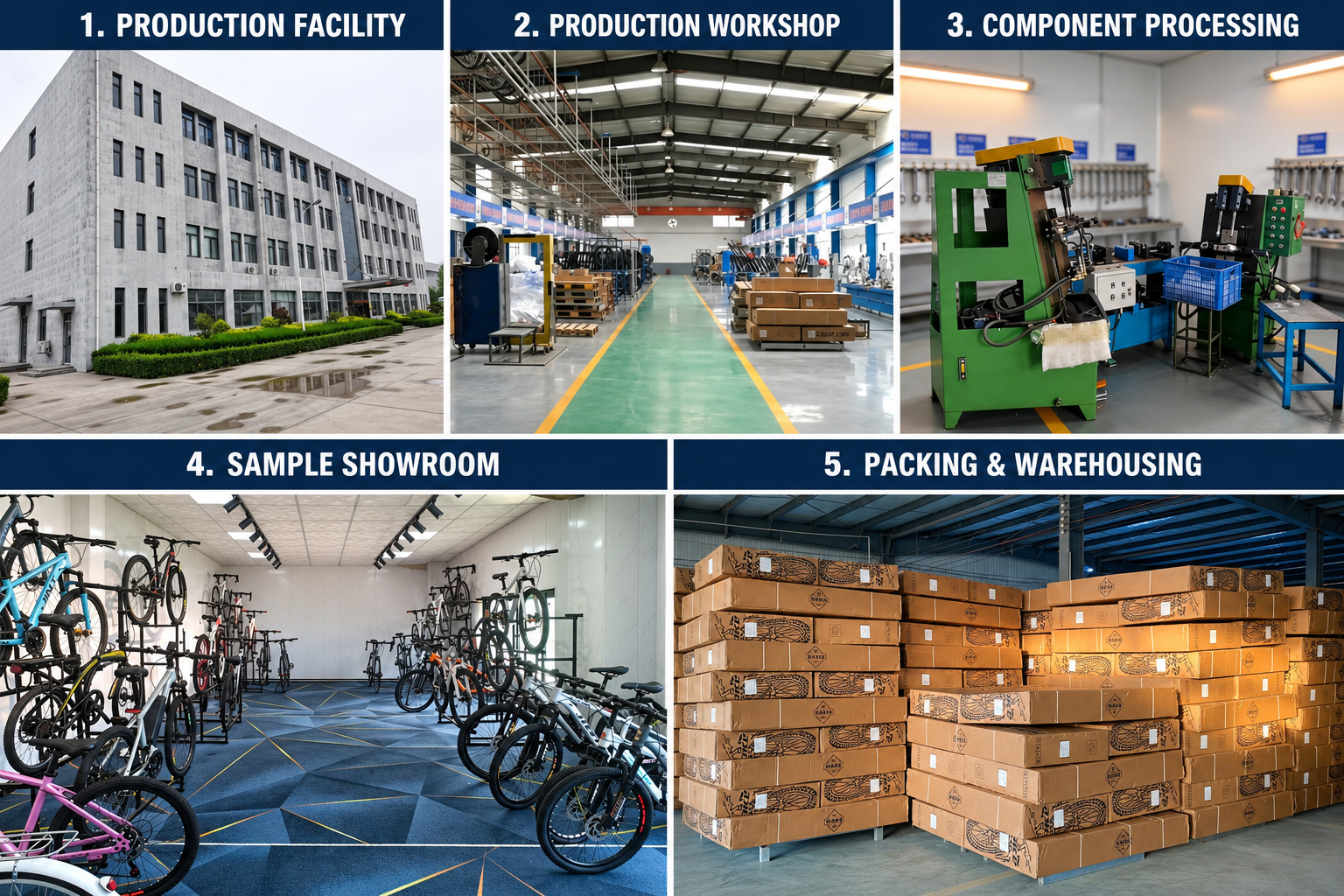
Our production facility in Wangqingtuo Town, Tianjin, supports frame and component preparation, bicycle assembly, inspection, packing, warehousing and sample development. Production is organized around the approved bicycle specification, component BOM, color, branding and packaging requirements rather than a general model description.
Before materials are scheduled for bulk production, we confirm the model, frame and wheel size, component configuration, quantity by color, logo artwork, packing method and destination requirements. These confirmed details become the reference for assembly, inspection and final order verification.
Frame and Component Preparation
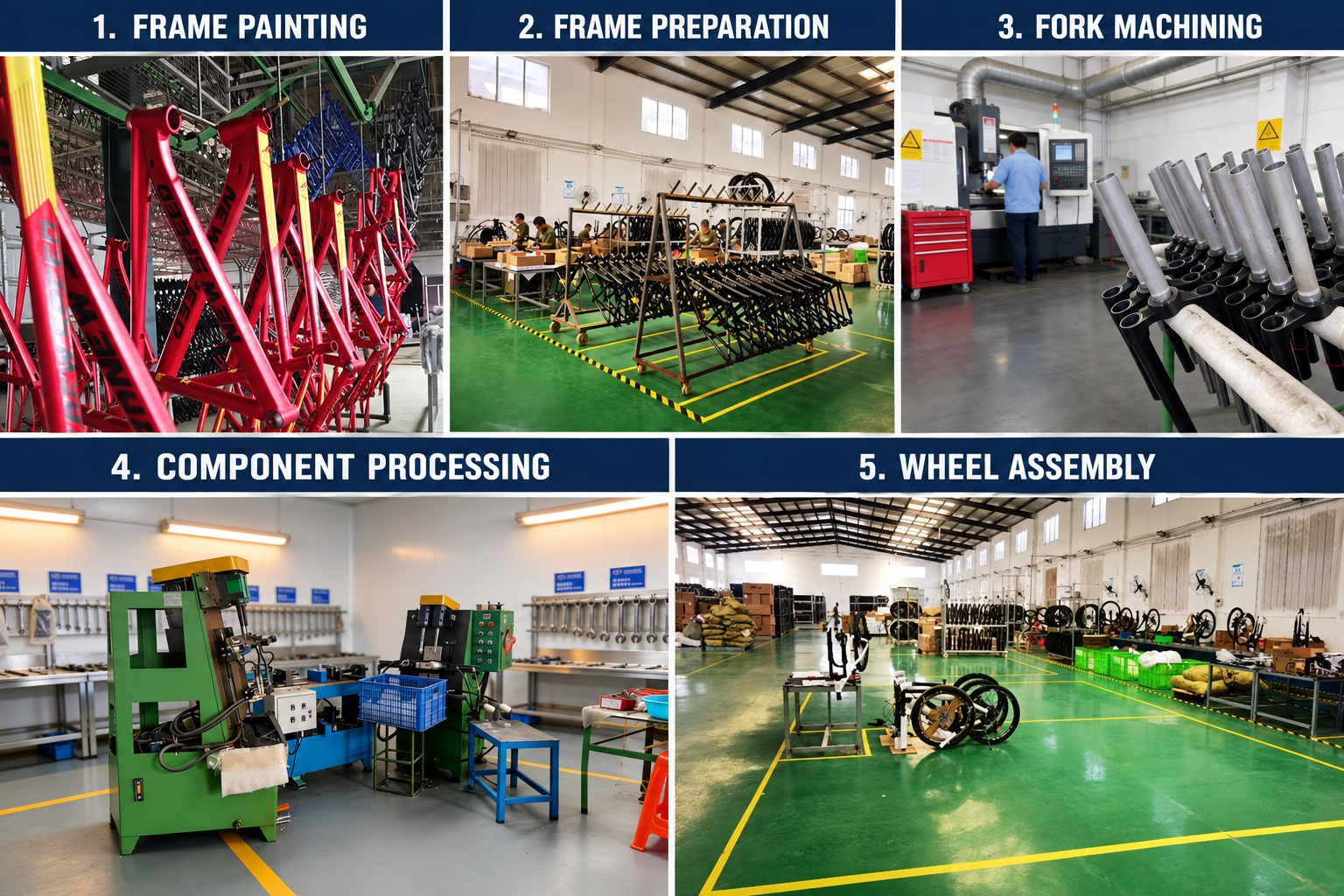
Bicycle manufacturing begins with the frame, fork and required components for the approved model. Frame material, size, structure and finish must match the order specification before assembly starts. Visible surface defects, alignment concerns or incorrect mounting points should be identified at this stage instead of after the bicycle has been completed.
Depending on the project, bicycle frames may use aluminum alloy, carbon fiber or selected steel materials. Available frame processes and structures vary by model, so buyers should confirm whether they are selecting an existing frame platform or requesting a more extensive frame development project.
Our bike frame manufacturing page explains the frame-related points that can affect structure, appearance, model selection and production preparation.
Components are prepared against the approved BOM. These may include the fork, drivetrain, brakes, wheelset, tires, cockpit parts, saddle, pedals, racks, fenders and other model-specific accessories. Brand, model and specification substitutions should be confirmed before installation, especially when component availability affects cost or production timing.
 Bicycle Assembly and Component Installation
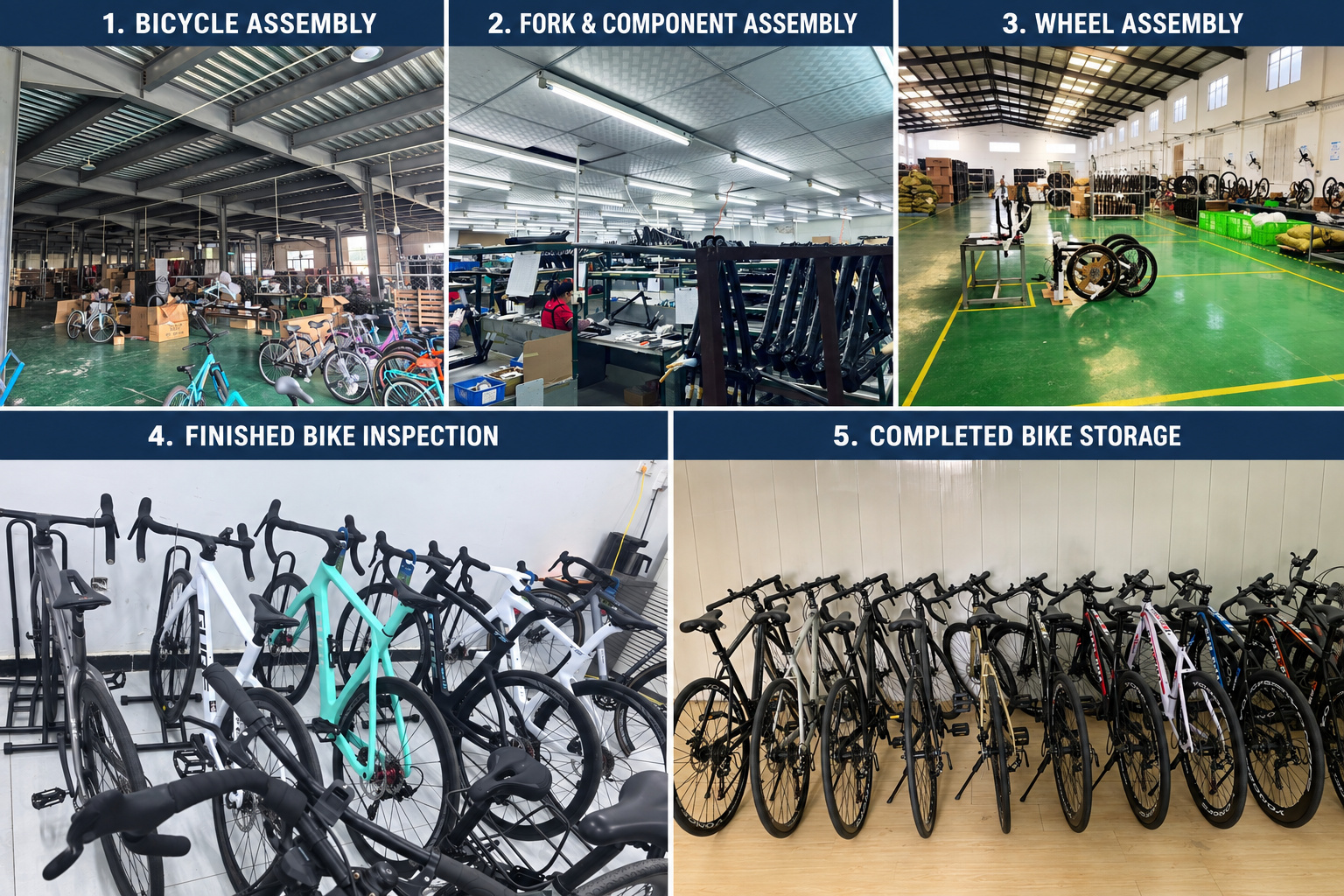
During assembly, the frame, fork, drivetrain, brakes, wheels, handlebar, saddle and accessories are installed in the required sequence. Correct fitment and adjustment are important because the same component list can produce different results if cable routing, fastener tightening, wheel alignment or brake adjustment is inconsistent.
The bike assembly process covers how approved components move from preparation and installation to adjustment and finished-bike checking.
Mechanical assembly checks focus on component identity, installation position, key fasteners, steering movement, wheel alignment, spoke condition, drivetrain operation and brake response. Folding bicycles also require attention to the folding structure and locking points. Models with racks, fenders, baskets or other accessories are checked against the order configuration.
Electric bicycles require additional coordination between the frame, motor, battery, controller, display, wiring and charger. Electrical parts must be compatible with the agreed system specification and target-market requirements. More detail is available on our electric bike integration page.
 Surface, Color and Branding Confirmation
Frame color, surface finish, decals, logos and product labels are checked against the approved sample or artwork record. The inspection reference should identify the agreed color, logo size, placement and orientation so that bulk production does not rely on visual memory.
Color differences may result from material, coating process, gloss level and lighting conditions. Buyers requesting a controlled brand color should provide a Pantone reference and approve a physical color sample when necessary.
Logo artwork should be supplied in a usable vector format with dimensions and placement instructions. Model labels, warning labels, barcode information and market-specific markings must also be finalized before bulk application. Any required compliance wording or test standard should be provided and verified for the destination market rather than assumed by the factory.
In-Process and Finished Bicycle Inspection
Quality control is carried out during preparation, assembly, adjustment and finished-product inspection. The exact inspection points vary by bicycle type, but commonly include:
- Frame and fork appearance
- Wheel alignment and spoke tension
- Brake response and clearance
- Shifting operation and drivetrain adjustment
- Steering and key fasteners
- Folding or suspension function where applicable
- Motor, battery, display and electrical function on e-bike models
- Logo, label, manual and accessory accuracy
- Finished appearance and packing condition
The approved sample and BOM provide the main inspection reference. Buyers may also arrange a pre-shipment or third-party inspection when required by their purchasing procedure.
Export Packing and Shipment Preparation
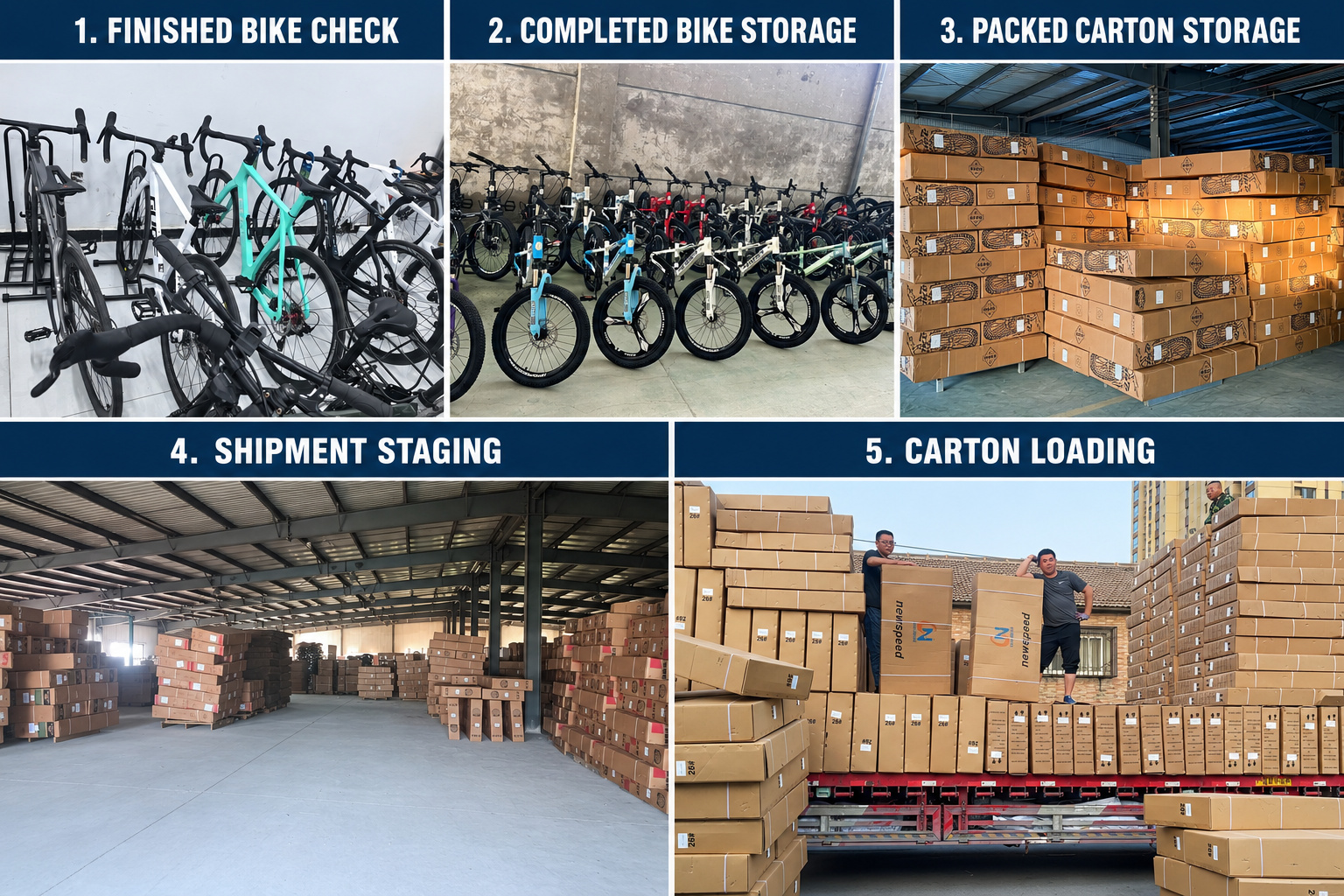
Packing is confirmed according to the bicycle structure, shipment method and destination requirements. Bicycles may be packed using an agreed assembly level, including SKD or CKD arrangements where applicable. Protective materials are placed around the frame and vulnerable components to reduce contact, scratching and movement inside the carton.
Before release, the packing check covers the bicycle configuration, removable parts, accessories, manuals, labels, carton condition and shipping marks. Carton dimensions and packing methods can affect loading quantity and freight cost, so they should be considered before the final quotation is approved.
Our final inspection and packing page provides more detail on finished checks, packaging confirmation and shipment preparation.
 Information Required Before Production Planning
To evaluate a bicycle manufacturing project, please provide the bicycle type, target frame and wheel size, component level, order quantity by model and color, branding requirements, packing method and destination.
For electric bicycles, include the expected motor power, battery voltage and capacity, drive system and relevant market requirements. If a reference model, drawing or component list is available, it can reduce specification revisions during quotation and sampling.
Production timing is confirmed after the specification, sample status, component availability, quantity and packaging requirements have been reviewed. Bulk manufacturing should begin only after the main product and branding details have been formally approved.