

Match the Frame to the Bicycle Program
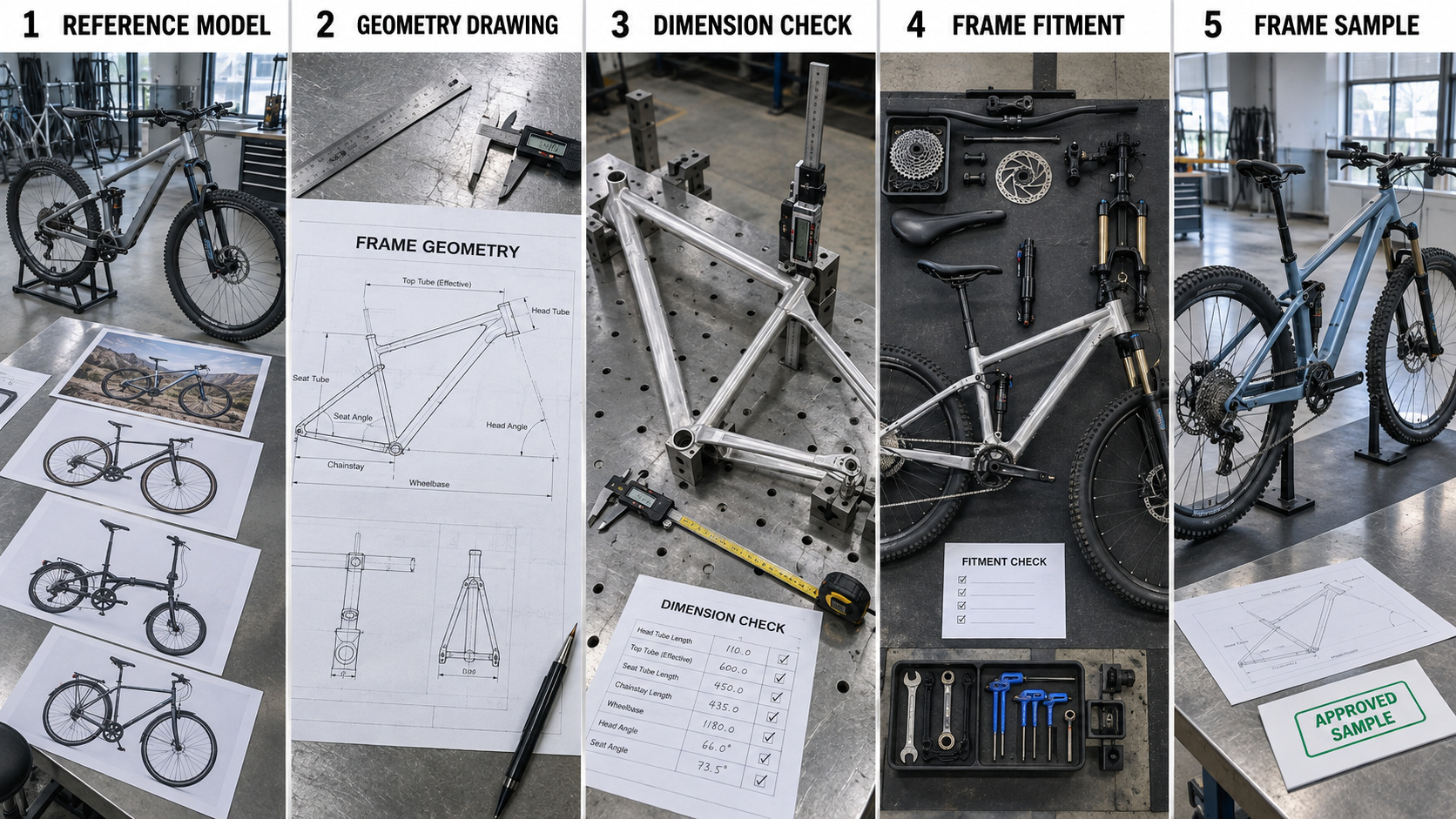
Tovin Bike supports frame selection and geometry confirmation for importers, distributors and private label bicycle brands. Projects normally begin with an available frame platform, a buyer’s specification, technical drawing or reference sample.
The review covers frame material, wheel size, frame size, rider position, component compatibility and required mounting points. The objective is to establish a practical frame setup that can be sampled, approved and repeated during bulk production.
Geometry changes depend on the available frame platform and production feasibility. New tooling or extensive structural modifications require separate evaluation and may involve a different MOQ, cost and development schedule.
Information Required for Frame Selection
A frame cannot be selected from appearance alone. Buyers should provide:
- Bicycle type and intended application
- Target market and rider size range
- Wheel and tire size
- Preferred frame material
- Required frame size or size range
- Riding position
- Fork type and suspension travel
- Brake and drivetrain requirements
- Motor and battery arrangement for electric models
- Cable routing preferences
- Required accessory mounts
- Expected order quantity
Clear photographs, measurement drawings or a physical reference sample help reduce uncertainty. The overall project sequence is explained on our Custom Bike Development page.
 Review the Key Geometry Points
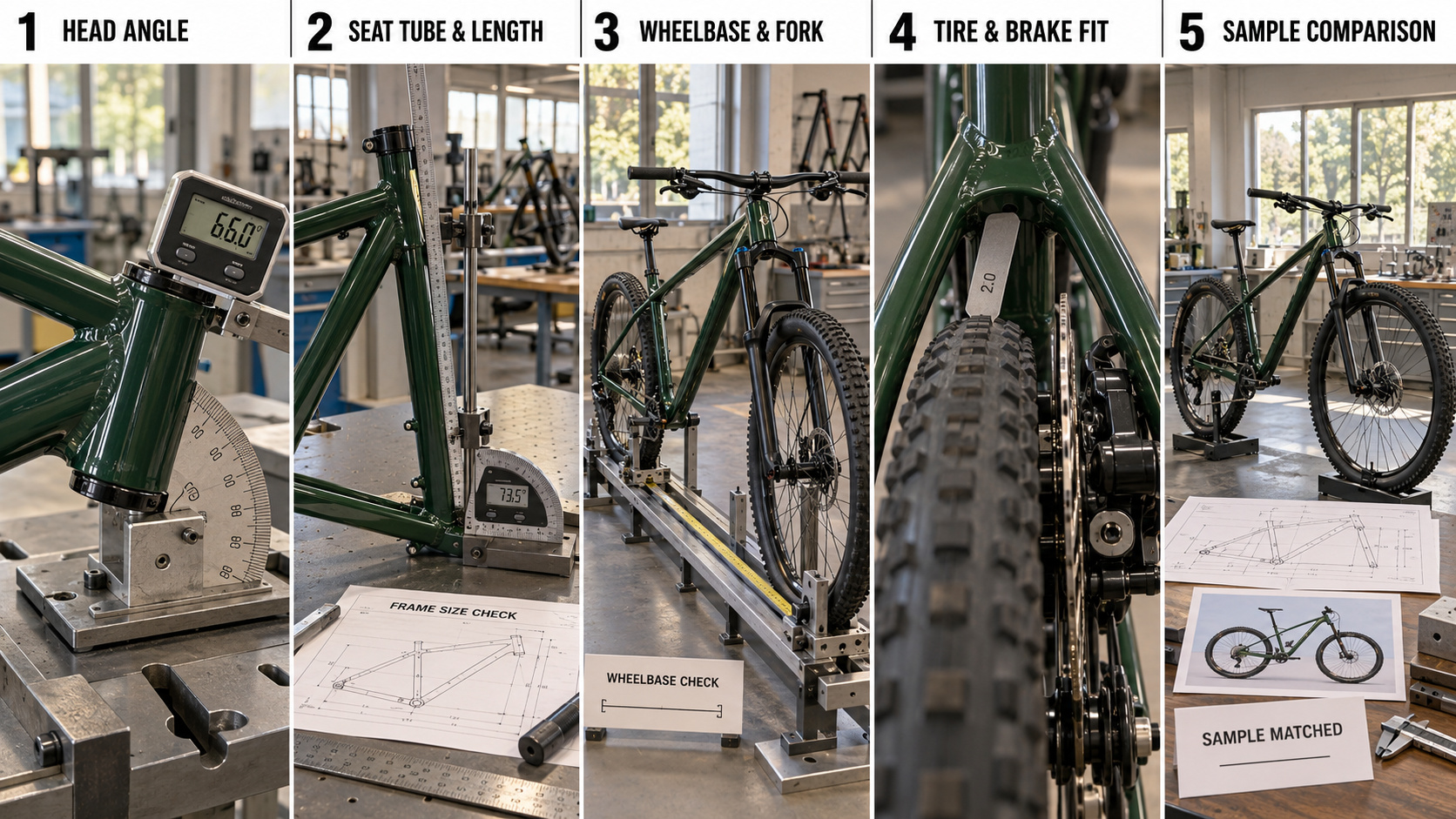
The geometry review focuses on dimensions that affect rider fit, handling and component installation. Depending on the bicycle category, these may include:
- Effective top tube length
- Seat tube length and angle
- Head tube length and angle
- Chainstay length
- Wheelbase
- Bottom bracket position
- Standover height
- Fork length and travel
- Tire and frame clearance
Mountain bikes, road bikes, folding bikes, city bikes and kids bikes require different geometry priorities. Dimensions should be confirmed according to the intended rider, wheel size and application rather than copied from an unrelated model.
For standard OEM projects, selecting the closest existing frame platform is usually more practical than changing every dimension. This helps control tooling requirements, sample cost, MOQ and lead time.
Confirm Material and Component Compatibility
Frame geometry must be reviewed together with the component BOM. Wheel size, tire width, fork travel, brake type, crankset, drivetrain, handlebar and stem all affect fitment.
Electric bike frames also require confirmation of the motor position, battery space, controller arrangement, cable routing and mounting points. Folding bicycles need additional checks around the folding joint, locking structure and folded dimensions.
Available frame materials may include aluminum alloy, carbon fiber or selected steel options, depending on the model. Material choice can affect tube shape, frame weight, finish, cost and available customization. Related options are covered under Material & Component Selection.
Confirm Drawings Before Sampling
Before sample production, the buyer and project team should confirm:
- Frame model, material and size
- Main geometry dimensions
- Wheel and tire compatibility
- Fork specification
- Brake and drivetrain interfaces
- Cable routing
- Accessory mounting points
- Color and decal positions
Structural changes should be identified before sampling. Changes to dimensions, mounting points or component interfaces after the sample is completed may require revision, additional cost and a longer schedule.
Check the Frame Sample and Fitment
A customized bicycle sample is used to verify the actual frame size, riding setup, component installation and appearance before bulk production.
The sample check should cover:
- Frame and fork alignment
- Fork installation and steering movement
- Wheel and tire clearance
- Brake mounting and rotor alignment
- Crankset and drivetrain compatibility
- Chainline and shifting function
- Handlebar, stem and saddle setup
- Cable routing
- Accessory mounting points
- Motor and battery fitment where applicable
- Folding and locking function where applicable
Customized samples commonly require around 15–30 days, depending on frame availability, component selection, color and branding. Projects requiring new tooling or substantial structural development need separate confirmation.
The approved sample, drawing and component BOM become the reference for bulk production. See Sample Development & Approval for the complete approval process.
 MOQ, Lead Time and Production Approval
Customized OEM bicycle programs commonly start around 300–1,000 units per model or color. Actual MOQ depends on the frame platform, requested changes, component specification, colors and packaging.
Bulk production normally requires around 25–45 days after the drawing, sample, BOM, artwork and packing details are approved and the deposit is received. New tooling, special components or multiple frame sizes may extend the schedule.
Production follows the approved frame drawing, sample and component BOM. Checks focus on frame size, visible alignment, finish, component fitment and required mounting points before final assembly and packing.
Request a Frame and Geometry Review
For an initial review, send the bicycle type, target market, wheel size, frame size, preferred material, fork, brake, drivetrain, quantity and required mounting details.
Technical drawings, measurement sheets, reference photographs or a physical sample are helpful when a specific geometry must be matched. Tovin Bike can review suitable existing frame platforms, clarify feasible changes and confirm the next drawing, quotation or sample step.